
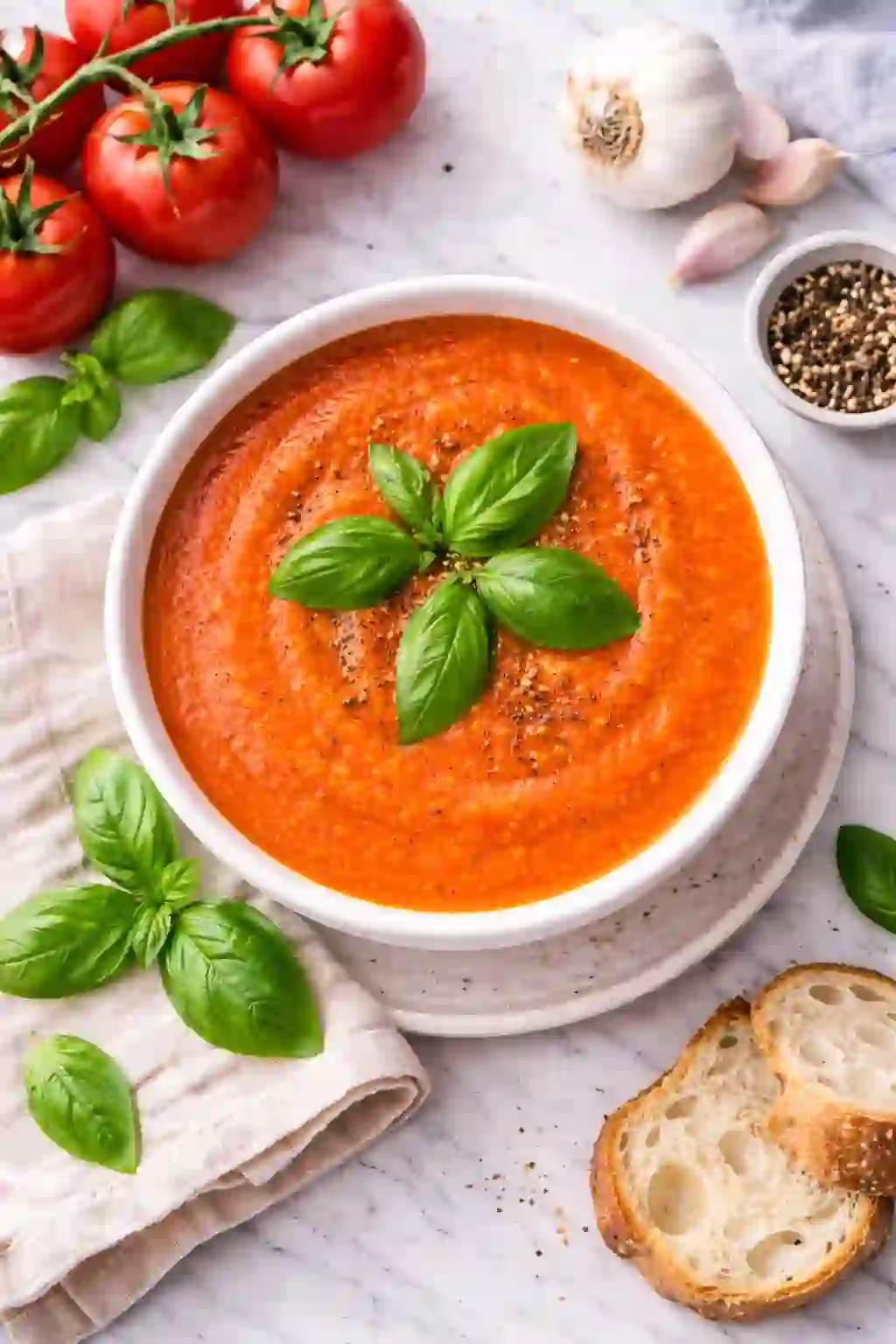
There’s something deeply comforting about a warm bowl of homemade soup, but if you’ve only ever opened a can, you’re seriously missing out. Store-bought tomato soup often leans metallic or overly sweet, while slow-roasting fresh tomatoes in the oven unlocks a rich, caramelized depth of flavor that simply can’t be rushed. That gentle roast concentrates the tomatoes’ natural sweetness and savoriness, creating a soup that tastes cozy, intentional, and downright gourmet.
What makes this tomato basil soup with fresh tomatoes especially lovable is its smart, lighter approach. Instead of relying on heavy cream, this recipe uses naturally sweet carrots blended right into the base for a silky, velvety texture—no dairy required. It’s simple, wholesome, and reliable, whether you’re working through a summer tomato haul or craving a comforting dinner that actually tastes like it was made from scratch.
Why This Tomato Basil Soup Works (The Real Science of Flavor)
The 350°F Slow Roast Makes All the Difference
Many tomato soup recipes rush the process by cranking the oven to 425°F or even broiling the tomatoes. While that can char the skins quickly, it often sacrifices the juicy interior. Roasting at a steady 350°F allows the tomatoes to slowly dehydrate and caramelize at the same time.
This gentle heat encourages the Maillard reaction, where natural sugars and amino acids develop deep, savory complexity without burning the skins to ash. The result? Tomatoes that are concentrated, jammy, and still bursting with juice, which forms the backbone of a truly rich roasted tomato basil soup.
Carrots Instead of Sugar = Better Flavor Balance
A lot of soups lean on white sugar to blunt tomato acidity, but that shortcut can leave the soup tasting flat. This recipe takes a smarter approach by using chopped carrots.
As the carrots simmer and blend:
- Their natural sugars soften sharp acidity
- Their starches add body, creating thickness without cream
- The flavor stays balanced and complex, not cloying
This technique is one reason this soup tastes like a homemade tomato basil soup from scratch, not a canned copy.
The Balsamic Advantage
Instead of bright but one-dimensional acidity from lemon juice, a small splash of balsamic vinegar adds layered depth. Aged balsamic brings:
- Gentle sweetness
- Subtle tang
- Natural umami that rounds out the roasted tomatoes
It enhances the soup rather than competing with the basil, helping everything taste more cohesive and intentionally seasoned.
Choosing the Best Tomatoes for Tomato Basil Soup
Why Roma Tomatoes Are King
If you want a soup that’s rich and concentrated—not watery—Roma (plum) tomatoes are the gold standard. They’re naturally meatier, with:
- A higher flesh-to-seed ratio
- Lower water content
- More intense tomato flavor once roasted
That structure makes them ideal for blending into a smooth, cohesive base, which is especially important for a tomato bisque soup fresh tomatoes lovers appreciate without relying on cream.
Can You Use Heirlooms or Beefsteak Tomatoes?
Absolutely, but with a small adjustment. Heirloom and beefsteak tomatoes contain significantly more juice, which can dilute flavor if you’re not careful.
If using these varieties:
- Expect a longer simmer time to reduce excess liquid
- Roast them until visibly shrunken and deeply caramelized
- Taste before blending and adjust seasoning as needed
The payoff is a slightly brighter, more complex flavor profile, making this recipe flexible enough to work across many tomato-based soup styles while still delivering depth.
Simple Ingredients for Deep Tomato Basil Flavor
One of the best things about this recipe is how short and intentional the ingredient list is. Every item plays a specific role there’s nothing extra, nothing artificial, and no filler.
Here’s why each ingredient matters:
- Roma tomatoes – The star of the show. Their low water content and dense flesh create a bold, concentrated tomato base once roasted.
- Extra-virgin olive oil – Adds richness and helps carry fat-soluble flavors from the tomatoes and herbs.
- Sea salt & freshly ground black pepper – Essential for balancing acidity and enhancing natural sweetness.
- Yellow onion – Builds savory depth and forms the aromatic foundation of the soup.
- Carrots – Provide natural sweetness and body, replacing the need for sugar or cream.
- Garlic – Adds warmth and complexity without overpowering the tomatoes.
- Vegetable broth – Keeps the soup light while allowing the roasted tomato flavor to shine.
- Balsamic vinegar – Brings gentle acidity and umami that rounds out the soup.
- Fresh thyme – Adds subtle earthiness that complements roasted tomatoes beautifully.
- Fresh basil – Blended in at the end for brightness, aroma, and that classic tomato-basil finish.
Because this recipe relies on roasting and blending rather than cream, the ingredients stay clean and plant-forward proof that a healthy tomato basil soup doesn’t have to sacrifice flavor.
How to Make Tomato Basil Soup Step by Step
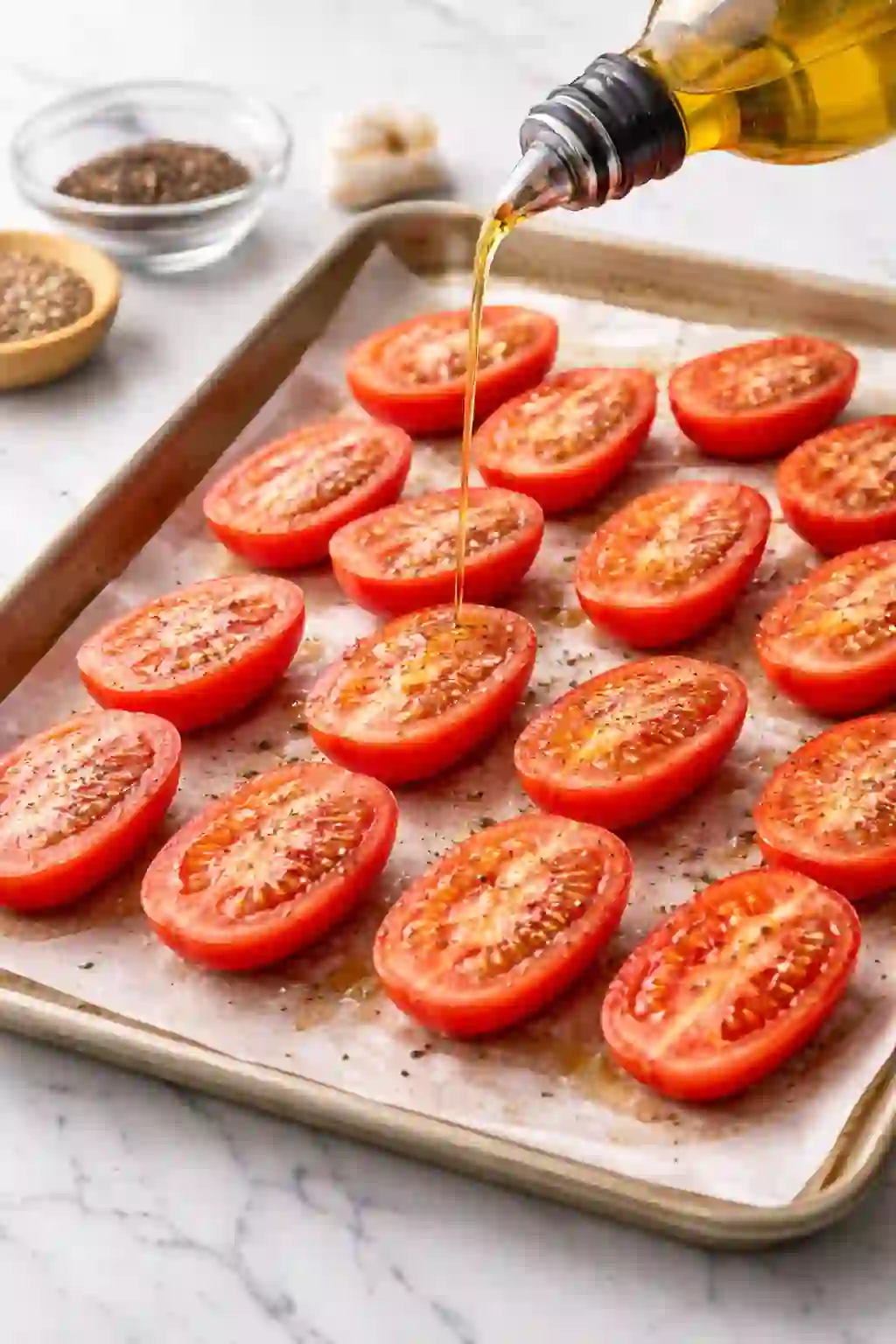
Step 1: A parchment-lined sheet pan filled with halved Roma tomatoes arranged cut-side up, lightly drizzled with olive oil and seasoned with salt and pepper, photographed on a bright white table background before roasting for deep, concentrated flavor.
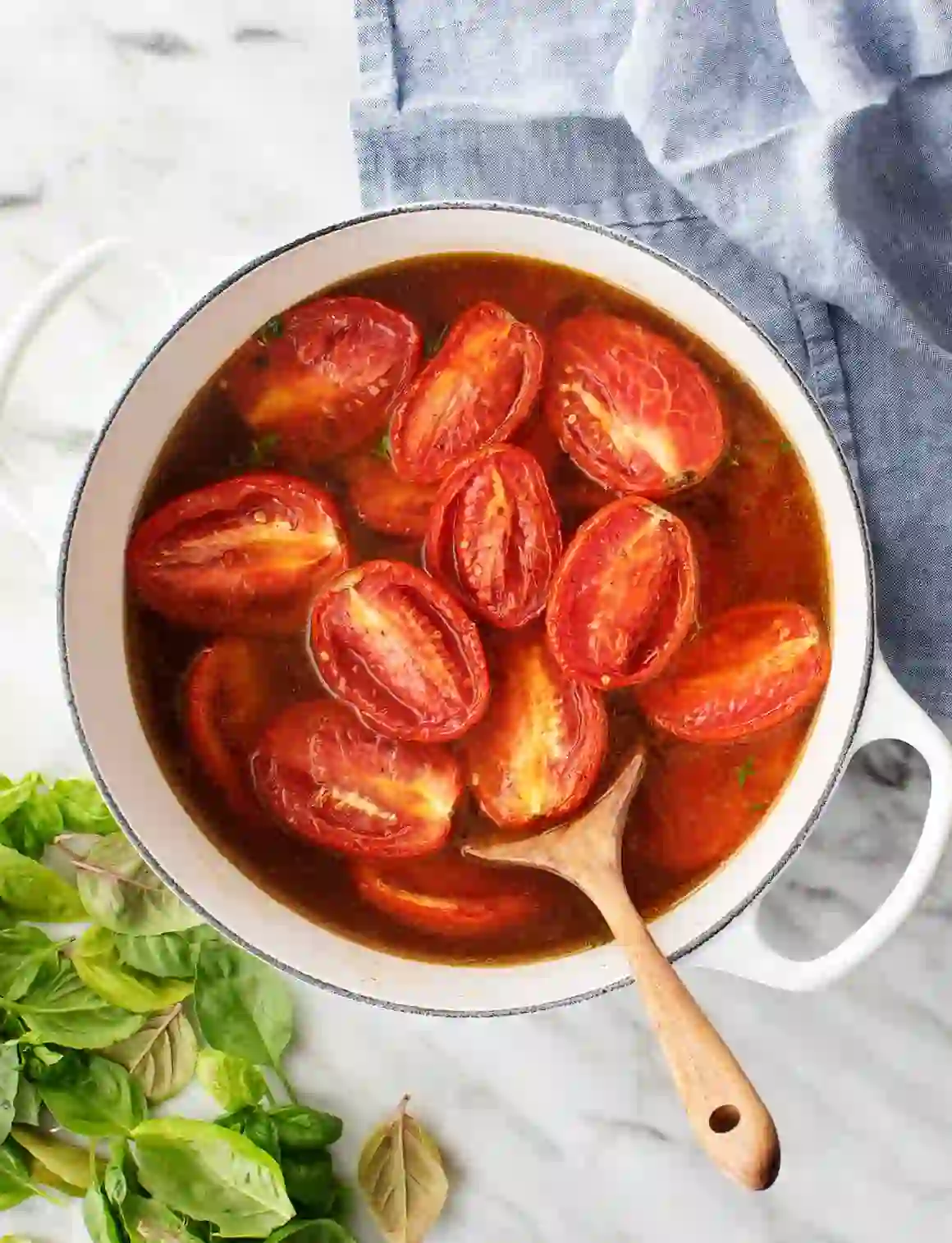
Step 2: Heat the remaining 2 tablespoons olive oil in a large pot over medium heat. Add the chopped onion, carrots, garlic, and ½ teaspoon salt, then cook, stirring occasionally, for about 8 minutes until everything is soft and fragrant. Stir in the roasted tomatoes, vegetable broth, balsamic vinegar, and fresh thyme, then bring to a gentle simmer and cook for 20 minutes.
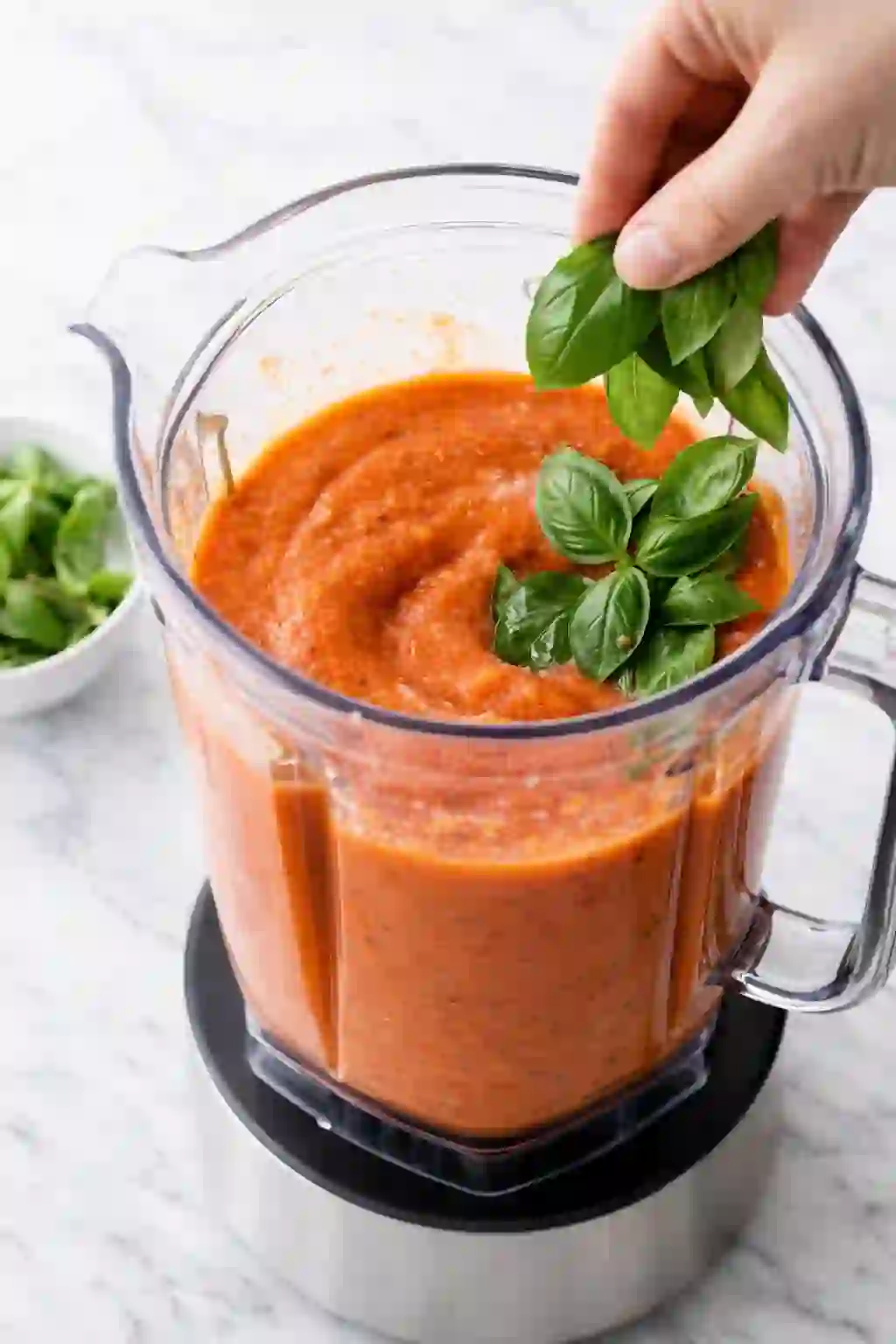
Step 3: Remove the pot from the heat and let the soup cool slightly. Carefully transfer the soup to a blender, working in batches if needed, and blend until completely smooth. Add the fresh basil leaves and pulse just until incorporated.
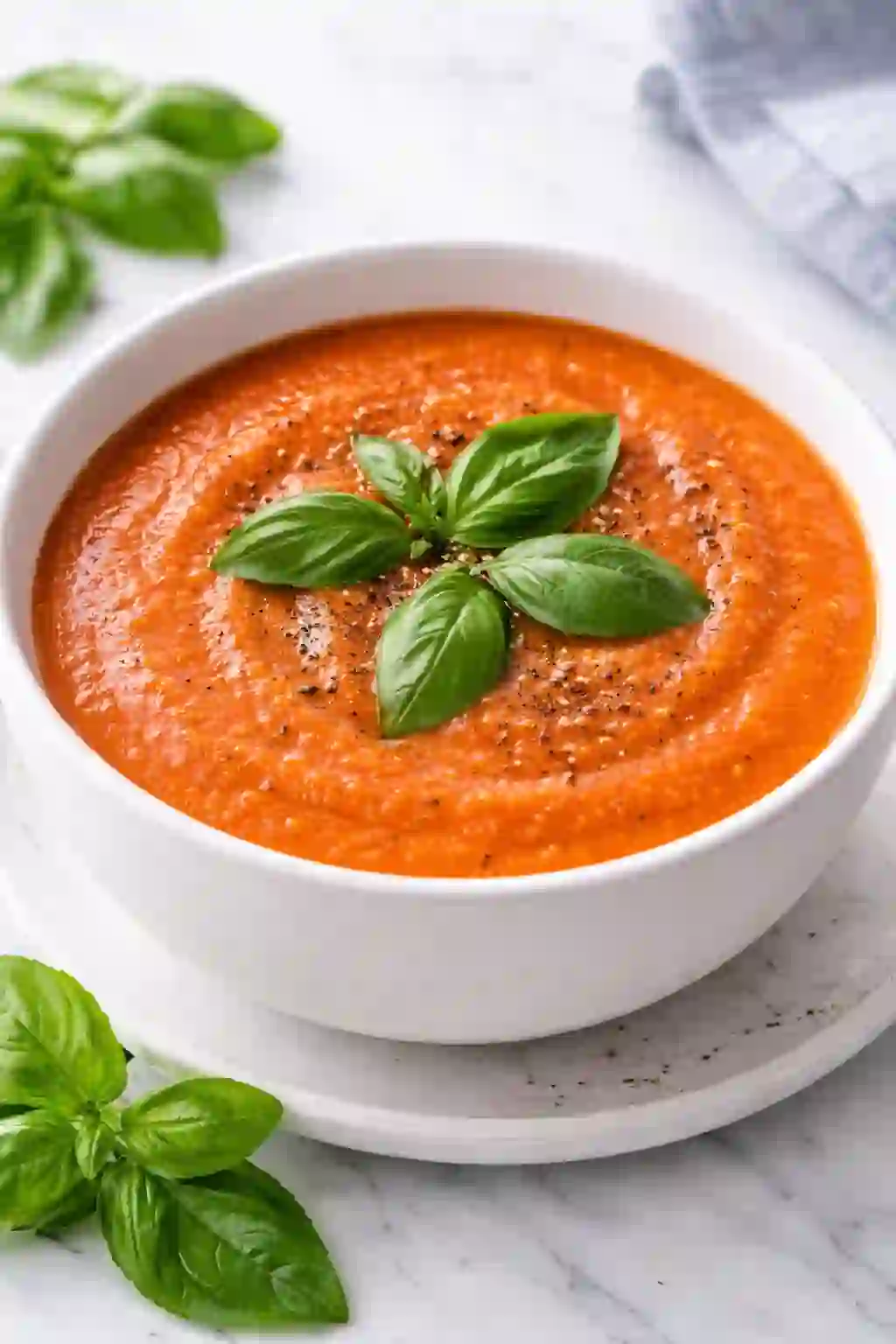
Step 4: Taste the soup and adjust seasoning with additional salt and black pepper if needed. Ladle the soup into bowls and finish with fresh basil leaves on top. Serve warm.
Expert Tips for an Ultra-Smooth, Velvety Soup
Getting that luxurious, spoon-coating texture doesn’t require cream, just a few smart techniques.
To Peel or Not to Peel?
No peeling required. Because this recipe is blended thoroughly, tomato skins break down completely, adding:
- Pectin, which naturally thickens the soup
- Extra tomato flavor
- Less prep time (always a win)
High-speed blending turns the skins from a liability into an asset, helping create a creamy tomato basil soup texture without dairy.
Blending Hot Soup Safely
Hot liquids expand rapidly when blended, so safety matters. Always:
- Fill the blender no more than halfway
- Remove the center cap from the lid
- Cover the opening loosely with a folded towel
This allows steam to escape and prevents pressure buildup—a small step that makes a big difference.
Immersion Blender vs. Countertop Blender
Both tools work, but the results are slightly different:
- Countertop blenders (like a Vitamix) create the smoothest, silkiest finish
- Immersion blenders are easier to clean but leave a more rustic texture
Either option still delivers a comforting bowl of homemade tomato basil soup from scratch, it just depends on your texture preference.
How to Fix Common Tomato Soup Problems
Even the best cooks run into small hiccups. The good news? Tomato soup is incredibly forgiving, and most issues are easy to fix.
1-“My Soup Is Too Sour.”
Tomatoes naturally vary in acidity, especially depending on season and variety. If your soup tastes sharper than expected:
- Stir in a tiny pinch of baking soda to neutralize acidity (it will foam briefly—this is normal)
- Or add a small splash of maple syrup if the carrots didn’t provide enough sweetness
This keeps the soup balanced without masking the tomato flavor that defines great tomato-based soups.
2-“My Soup Is Too Thick.”
Because this soup relies on vegetable starch rather than cream, it can thicken as it cools.
- Simply stir in a splash of vegetable broth or water while reheating
- Warm gently and whisk to restore a silky texture
3-“Why Is My Soup Orange Instead of Red?”
This is completely normal and a good sign. When olive oil emulsifies with tomatoes and carrots, the color naturally shifts to a vibrant orange-red, similar to vodka sauce.
That creamy hue means:
- The soup is properly emulsified
- The texture will feel richer and smoother
- Flavor balance is right where it should be
What to Serve with Tomato Basil Soup
A great bowl of soup becomes a complete meal with the right pairing. These sides add contrast, texture, and balance to the soup’s rich, roasted flavor.
The Classic Comfort Combo
A crispy grilled cheese is hard to beat. Try:
- Sourdough bread for tang
- Sharp cheddar or gruyère for depth
The crunch and richness perfectly complement the smooth texture of this easy tomato basil soup.
Add Texture & Crunch
For contrast without heaviness:
- Homemade garlic-herb croutons
- Roasted chickpeas for protein and crunch
- Toasted pine nuts sprinkled on top
These additions make the soup feel restaurant-worthy without extra effort.
Fresh, Bright Sides
A light salad balances the savory richness beautifully. A simple arugula salad with lemon vinaigrette cuts through the roasted tomato flavor and refreshes the palate between bites.
How to Store, Freeze, and Reheat Tomato Basil Soup
This soup is just as practical as it is comforting, making it perfect for meal prep or make-ahead dinners.
Refrigerator Storage
Transfer cooled soup to an airtight container and refrigerate for 4–5 days. In fact, the flavors continue to develop after the first day, making leftovers even more satisfying, especially for a healthy tomato basil soup that stays light yet filling.
Freezing Instructions
Because this recipe is completely dairy-free, it freezes beautifully without separating.
- Allow the soup to cool completely
- Transfer to freezer-safe bags or silicone cubes
- Freeze for up to 3 months
This makes it ideal for batch cooking and future cozy nights.
Reheating Tips
Reheat gently on the stovetop over medium-low heat, stirring occasionally. If the soup looks separated, a vigorous whisk will quickly re-emulsify the olive oil and broth, restoring that smooth, cohesive texture.
Conclusion
This tomato basil soup with fresh tomatoes is proof that simple ingredients and the right technique can create something truly special. Slow-roasted tomatoes deliver deep flavor, while fresh basil and carrots bring balance and a smooth, comforting finish—no cream, no shortcuts, just real food done right.
If you’re planning a cozy, comforting meal, pair this soup with crusty bread or follow it up with a hearty main like this Spaghetti Bolognese Recipe for a complete, satisfying dinner. Give the soup a try, freeze leftovers for later, and don’t forget to leave a comment, rate the recipe, or share it with someone who loves a good homemade meal.
Recipe FAQs
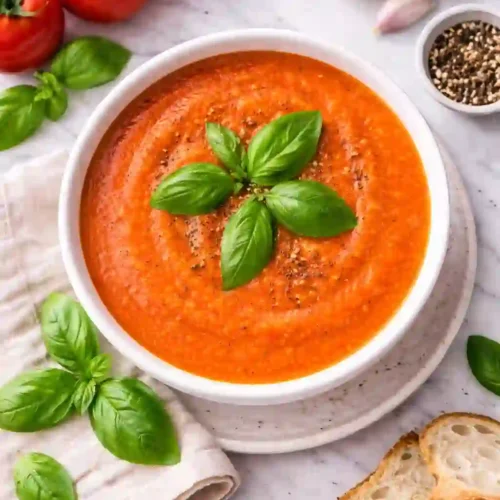
The Best Tomato Basil Soup With Fresh Tomatoes (From Scratch)
Equipment
- baking sheet
- parchment paper
- large pot
- blender
- knife
Ingredients
- 2½ pounds roma tomatoes, halved
- ¼ cup extra-virgin olive oil
- Sea salt and freshly ground black pepper
- 1 medium yellow onion, chopped
- ⅓ cup chopped carrots
- 4 garlic cloves, chopped
- 3 cups vegetable broth
- 1 tbsp balsamic vinegar
- 1 tsp fresh thyme leaves
- 1 cup fresh basil leaves, loosely packed + more for garnish
Instructions
- Preheat the oven to 350°F and line a large baking sheet with parchment paper. Place the tomatoes cut side up on the baking sheet, drizzle with 2 tablespoons of the olive oil, and sprinkle with salt and pepper. Roast for 1 hour, or until the edges just start to shrivel and the insides are still juicy.
- Heat the remaining 2 tablespoons olive oil in a large pot over medium heat. Add the onions, carrots, garlic, and ½ teaspoon salt and cook until soft, about 8 minutes. Stir in the tomatoes, vegetable broth, vinegar, and thyme leaves and simmer for 20 minutes.
- Let cool slightly and pour the soup into a blender, working in batches if necessary. Blend until smooth. Add the basil and pulse until combined.
- Season to taste, ladle into bowls, and garnish with fresh basil leaves.