
Burger Recipes always bring me back to a simple question a friend once asked: “Why do restaurant burgers taste better than mine?” I used to ask the same thing in my own kitchen. After many attempts, I found that great burgers do not need fancy tools or hard steps. They need simple choices done right, like picking ground chuck with the right fat ratio and shaping the patty with care.
Over time, I learned that small details make a big difference. The way you handle the meat, the heat you use, and even a small thumbprint in the center can change everything. In this guide, I will show you how to turn basic burger recipes into juicy, rich burgers that taste like they came from a top grill spot. If you want to explore more ideas for your next cookout, check out these BBQ Recipes for Summer.
Why You’ll Love These Recipes
- Quick and easy to prepare, even on busy days
- Uses simple, easy-to-find ingredients
- Perfect for family meals, cookouts, or weekend treats
- Juicy texture with a rich, beefy taste in every bite
- Flexible method with grill or stovetop options
These burger recipes stand out because they focus on both method and flavor. You get the choice between a classic beef-only style or a simple trick that helps lock in juices. That means beginners can get great results, while more experienced cooks can keep things simple and pure.
There is also a real sense of comfort in making your own burgers. The smell of beef on heat, the sound of a good sear, and that first bite all come together in a way that feels satisfying. Whether you cook for yourself or share with others, these burgers always leave a strong impression.
The Secret to a Truly Juicy Patty
A great burger starts with the right base. The most trusted choice is ground chuck with an 80/20 ratio. This means 80% lean meat and 20% fat. That fat is what keeps the patty juicy and full of flavor during cooking. If the meat is too lean, the burger can turn dry and firm.
Temperature also plays a big role. Keep the beef cold until the moment it hits the heat. Warm meat softens the fat too early, which can lead to a flat and dry result. Cold meat holds its shape better and gives you a stronger sear when it cooks.
Now you have two simple paths to follow. The purist path uses only salt and black pepper. This keeps the natural beef flavor strong and clean. The second option adds a small boost for moisture. A splash of Worcestershire sauce, a bit of olive oil, or even fine crumbs can help hold the juices inside the patty, which is helpful for beginners.
Mastering the basics is what makes great burger recipes stand out. From choosing the right fat ratio to handling the meat gently, every small detail matters. If you want a deeper step by step guide, check out this classic hamburger patty recipe to learn the exact technique for building the perfect foundation.
Simple Ingredients for Juicy, Flavor-Packed Burgers
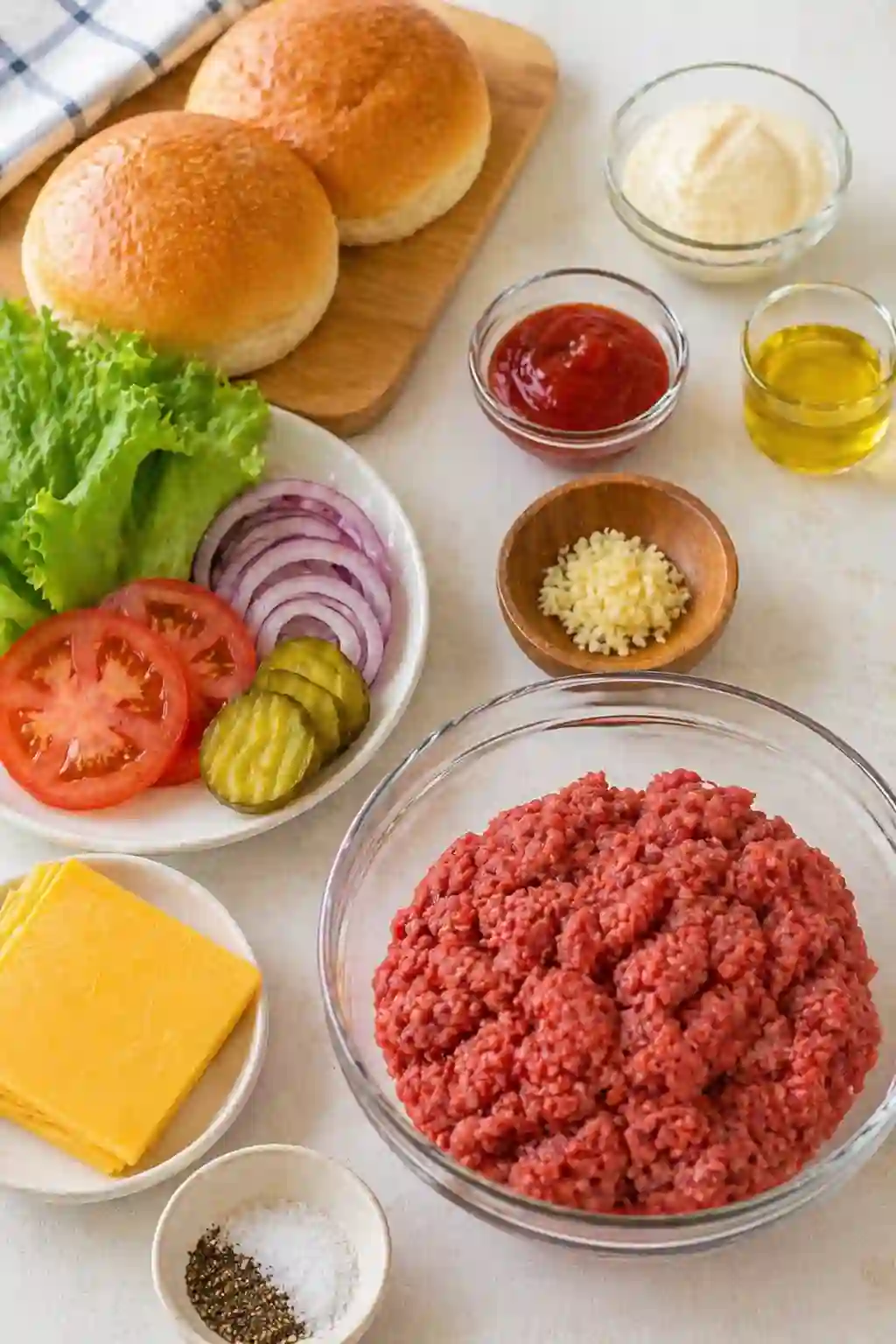
Here is everything you need to build rich and juicy burgers. The list stays simple, but each item plays a key role.
For the Burger Patties
- Ground chuck beef, 2 lb with an 80/20 fat ratio for the best balance of flavor and juice
- Fine sea salt, added just before cooking for better taste
- Freshly ground black pepper, for a light kick
For the Buns and Toppings
- Burger buns, 6 pieces, soft but strong enough to hold the juices
- Cheddar cheese, 6 slices, medium or thick cut for a creamy melt
- One large tomato, sliced into even rounds
- Green leaf lettuce, about 12 fresh leaves for crunch
- Half a red onion, thinly sliced into rings
- Dill pickle slices, about half a cup for a tangy bite
Optional Simple Sauces
- BBQ mix: mayo with a small spoon of sweet BBQ sauce
- Mustard mix: mayo with a touch of yellow mustard
- Dijon mix: mayo with a bit of Dijon mustard for a sharper taste
- Classic fry sauce: mayo mixed with ketchup for a smooth and sweet flavor
Each ingredient adds something special. When combined, they create a burger that feels balanced, rich, and satisfying in every bite.
Step-by-Step Guide to Making Perfect Juicy Burgers
Step 1: Prepare everything first
Start by slicing your toppings and mixing your sauces. This saves time once the patties hit the heat. Spread a thin layer of butter on each bun and toast them on a skillet or grill until lightly golden. This step adds flavor and helps stop the buns from getting soggy.
Step 2: Shape the patties with care
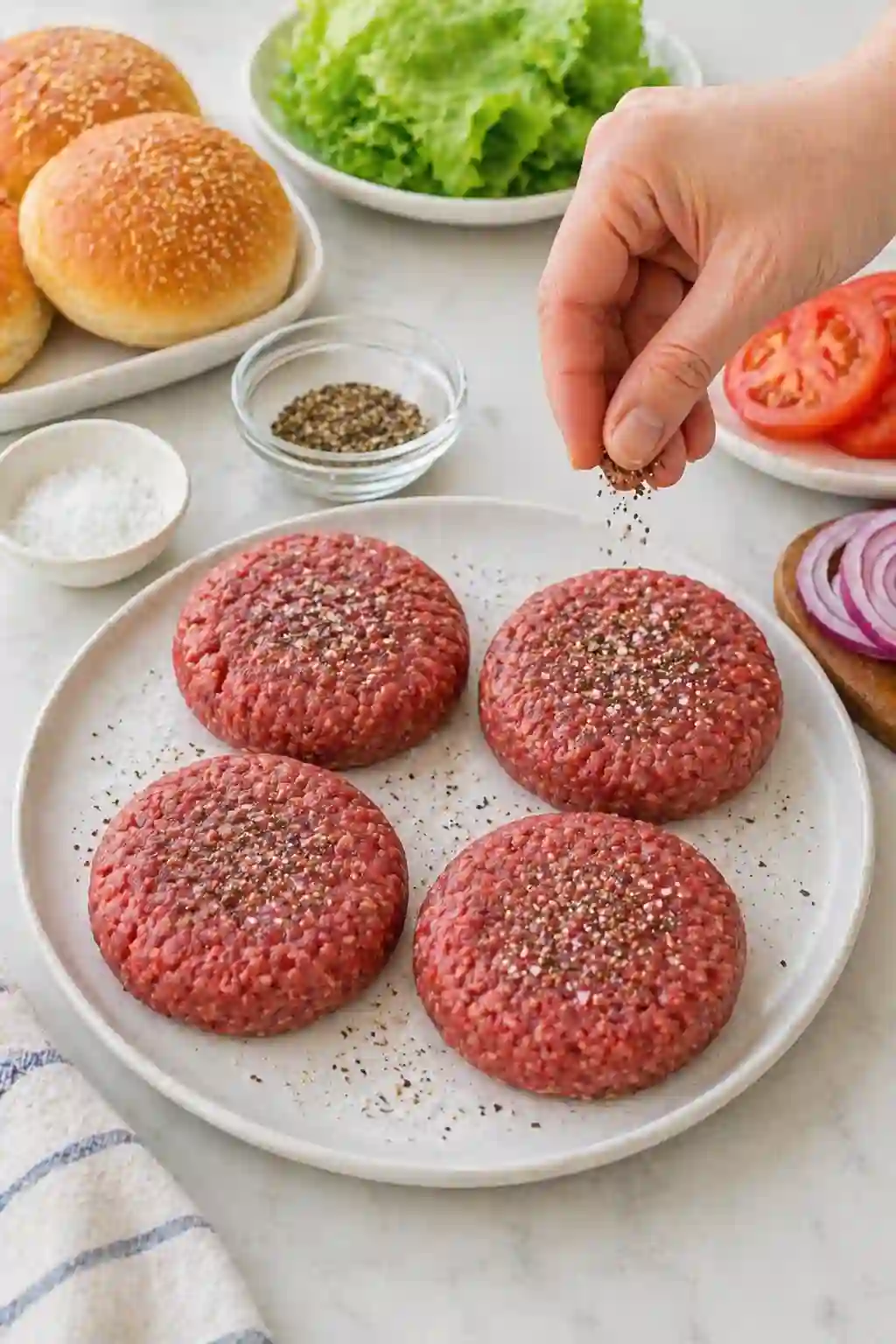
Divide the ground beef into 6 equal portions. Gently shape each one into a patty about half an inch thick. Make them slightly wider than the buns since they will shrink during cooking. Press a small indentation in the center using your thumb or a spoon. This helps the burger stay flat instead of puffing up.
Step 3: Season at the right time
Add salt and black pepper just before cooking. This keeps the meat tender and prevents it from drying out too early.
Step 4: Cook the patties
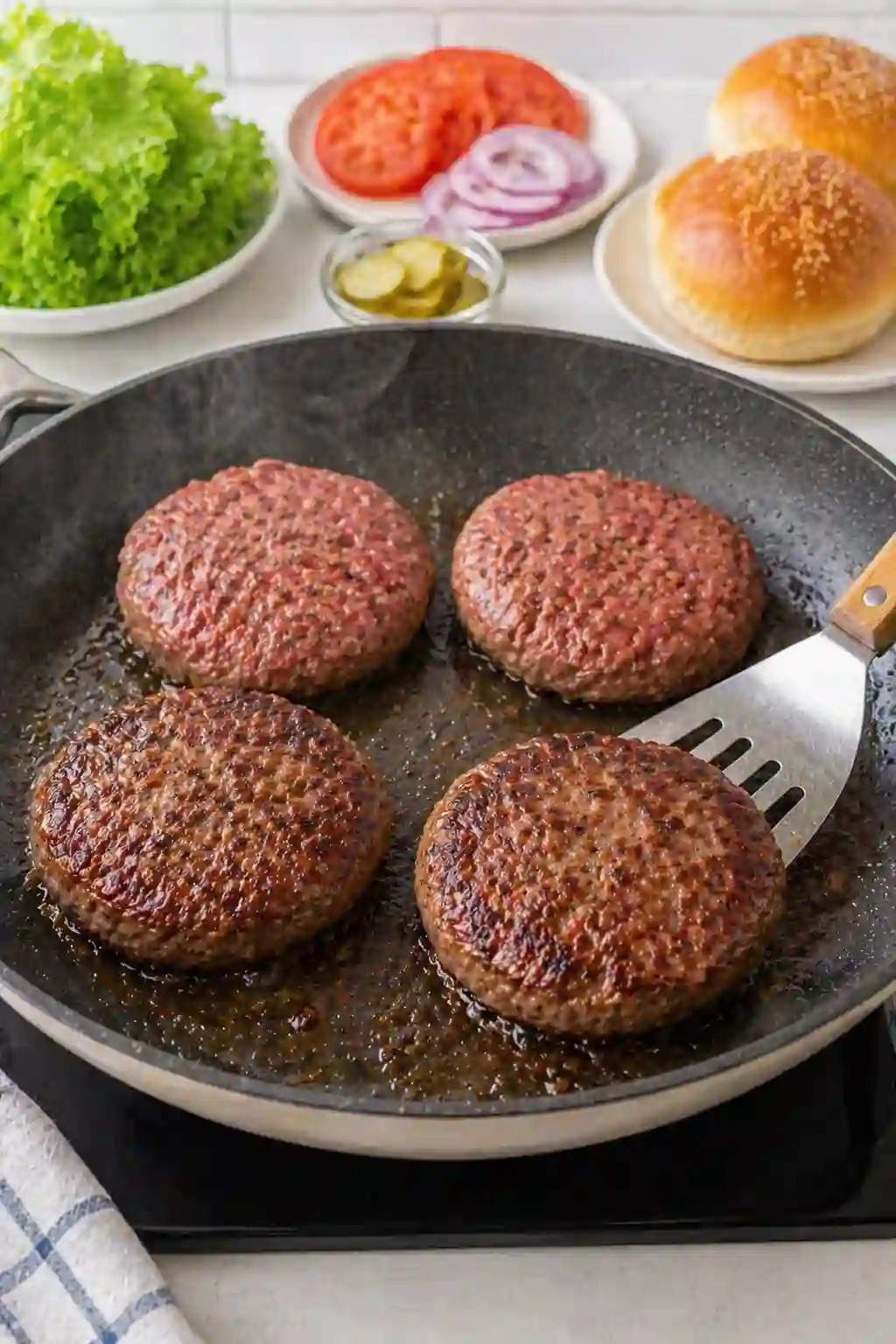
Heat your grill or pan to medium heat. Place the patties with the indentation facing up. Let them cook without moving for about 3 to 5 minutes. You will see juices rise to the top and a crust form underneath. Flip once, then cook the other side for another 3 to 5 minutes.
The Science Behind a Juicy Burger
A great burger is not just about cooking. It is about what happens on the surface of the meat.
When your pan or grill reaches around 400°F, a process called the Maillard reaction begins. This creates the deep brown crust and rich flavor you expect from a good burger.
Let the patty cook without moving for a few minutes. This helps the surface form a strong crust instead of steaming. A good sear builds flavor and gives your burger its classic taste.
Step 5: Add cheese at the end
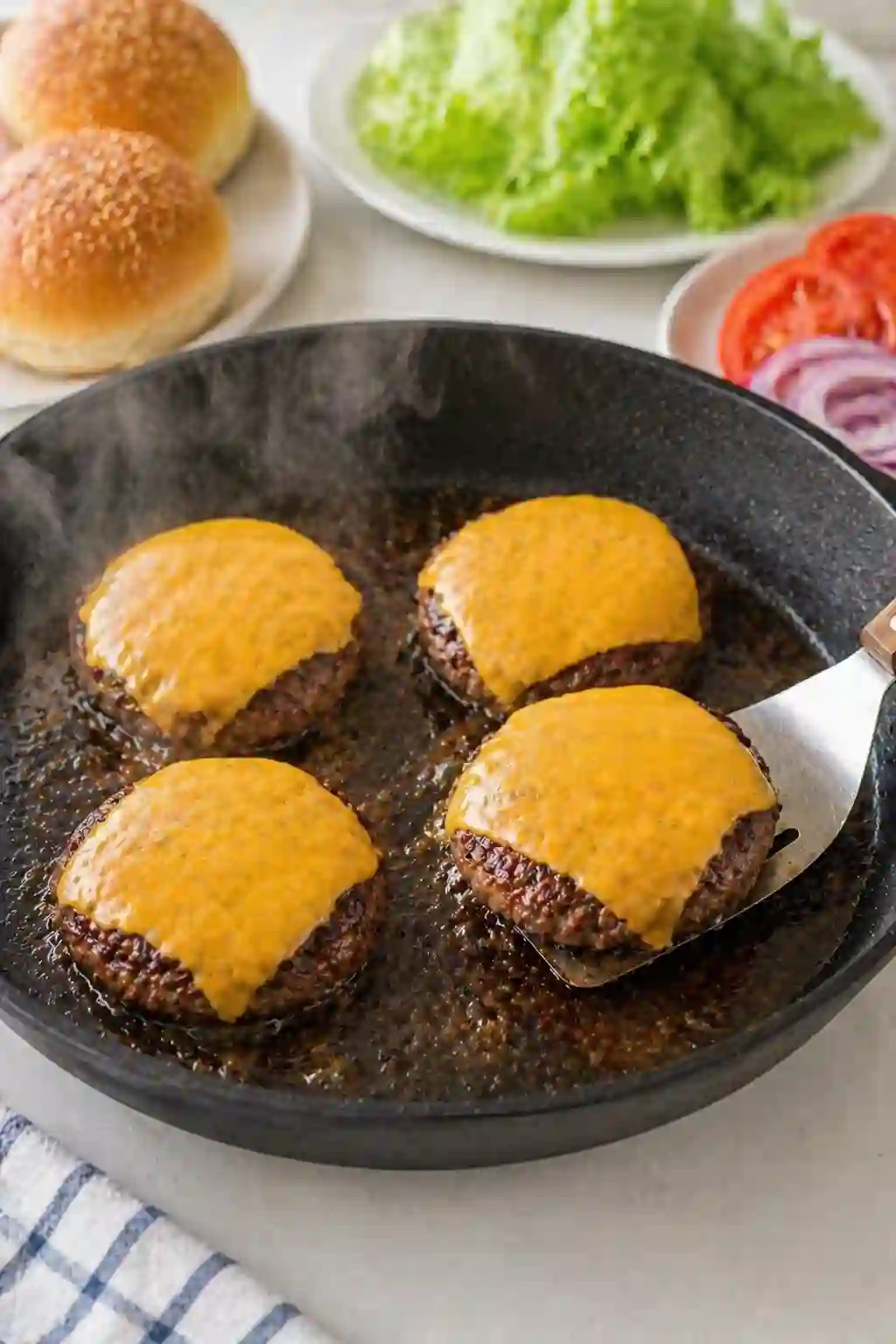
Place a slice of cheddar on each patty during the last minute of cooking. Cover briefly to help it melt smoothly over the meat.
Step 6: Check doneness and rest
Cook until the internal temperature reaches about 155°F, which will rise to 160°F after resting. Remove from heat and let the patties rest for 5 minutes. This step helps the juices settle back into the meat.
Step 7: Build your burger the right way
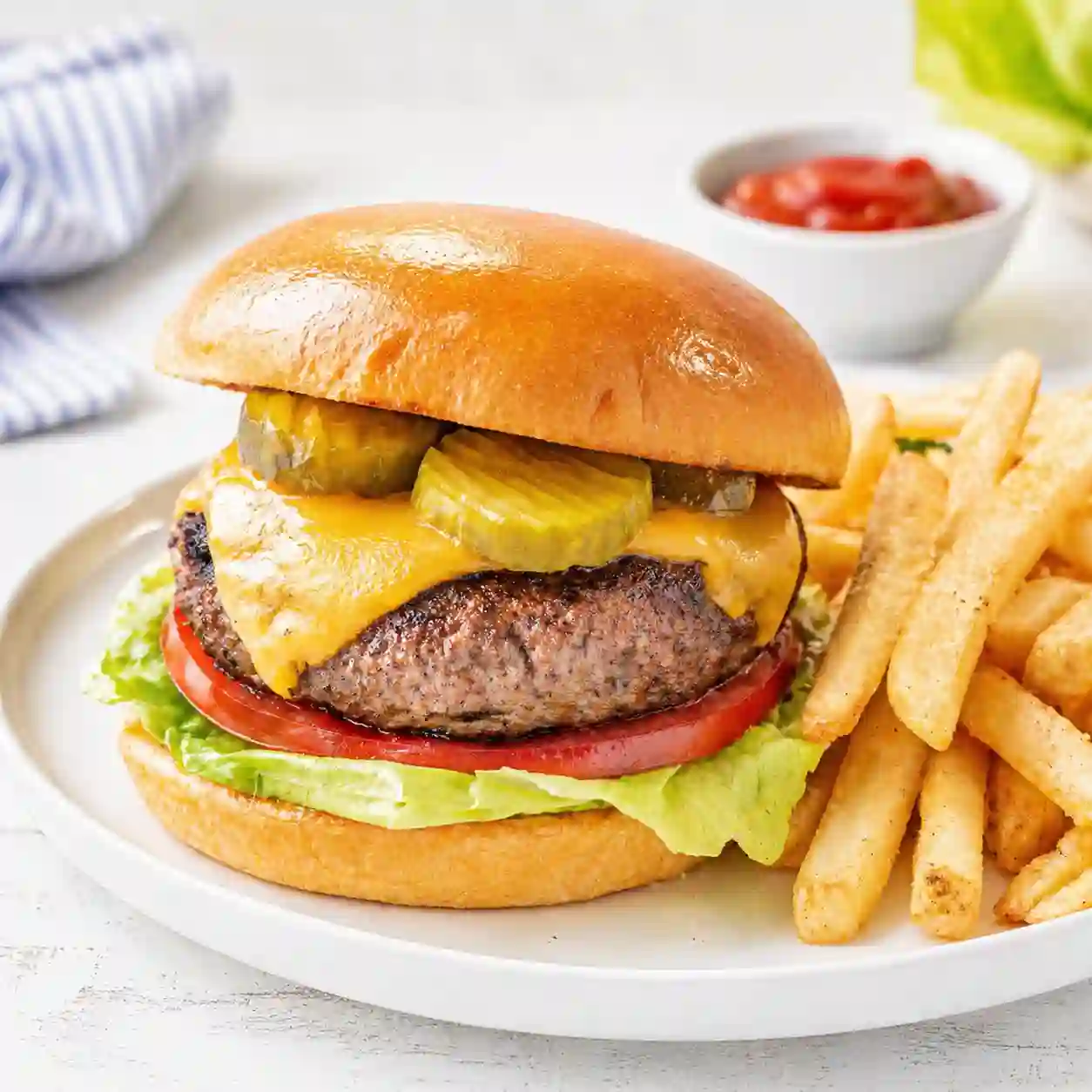
Spread sauce on both buns. Add pickles, lettuce, tomato, and onion to the bottom bun. Place the hot patty on top, then close with the top bun. This order keeps the bun from getting too wet and holds everything in place.
Professional Burger Assembly Order
Building your burger the right way keeps each bite balanced and stops the bun from getting soggy.
Follow this simple order:
- Bottom bun
- Sauce
- Lettuce
- Tomato
- Onion
- Patty with cheese
- Pickles
- Top bun
The lettuce layer is very important. It acts like a barrier between the juicy patty and the bun, helping the bread stay firm and not soak up too much moisture.
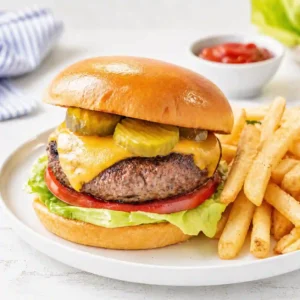
Burger Recipes

Equipment
- grill or skillet
- mixing bowl
- Spatula
- knife
Ingredients
- 2 lb ground chuck beef (80/20)
- fine sea salt (to taste)
- freshly ground black pepper (to taste)
- 6 burger buns
- 6 slices cheddar cheese
- 1 large tomato, sliced
- 12 green leaf lettuce leaves
- ½ medium red onion, thinly sliced
- ½ cup dill pickle slices
Instructions
- Prepare toppings, sauces, and buns before cooking.
- Divide beef into 6 equal portions and shape into patties.
- Press a small dent in the center of each patty.
- Season patties with salt and pepper right before cooking.
- Cook patties on a grill or skillet for 3 to 5 minutes per side.
- Add cheese during the last minute of cooking.
- Let patties rest for 5 minutes before serving.
- Assemble burgers with buns, toppings, patties, and serve.
Notes
Nutrition
Cooking Methods and Times for Perfect Results
Grilling Method
Grilling gives burgers that classic smoky taste and a strong outer crust. Preheat your grill to medium heat and keep the lid closed as much as possible. This helps cook the patties evenly while keeping them juicy inside. Flip only once to keep the structure intact and avoid losing juices.
Grilling is one of the most popular ways to prepare burger recipes, giving you that smoky, outdoor flavor everyone loves. The key is controlling the heat and avoiding overcooking to keep the patties juicy. For a complete outdoor method, check out this juicy grilled burger recipe to get perfectly tender results every time.
Cast-Iron Skillet Method
A cast-iron skillet creates a rich crust because the burger cooks in its own fat. Heat the pan well before adding the patties. Once the meat touches the surface, you should hear a clear sizzle. This is what builds that deep brown crust on the outside.
When it comes to stovetop burger recipes, using a cast-iron skillet gives you a rich, caramelized crust that’s hard to beat. This method is especially popular for smash-style burgers, where pressing the meat creates crispy edges and intense flavor. If you want to try this technique, follow this smash burger recipe for a perfect crispy finish.
Internal Temperature and Doneness Guide
Use this simple guide to cook your burgers just the way you like:
- Medium-Rare: warm red center, about 130°F, cook around 3 to 4 minutes per side
- Medium: pink center, about 140°F to 145°F, cook about 4 minutes per side
- Well-Done: no pink, about 160°F, cook 5 to 6 minutes per side
Cooking to the right temperature makes a big difference in both taste and texture.
Customize Your Burger with Toppings and Flavor Options
One of the best parts of burger recipes is how easy it is to change them to match your taste. You can keep things classic or try bold flavors with just a few simple swaps.
Try Different Cheeses
Cheese can change the whole feel of your burger. Cheddar is a solid choice, but you can also use:
- Swiss for a mild and creamy bite
- Blue cheese for a sharp and rich taste
- Pepper jack for a bit of heat
Add Simple Sauces
A good sauce brings everything together. You can mix quick options at home:
- BBQ mayo for a sweet and smoky flavor
- Fry sauce for a smooth and tangy taste
- Dijon mix for a slight sharp kick
- Spicy mayo if you want extra heat
Bring in Some Crunch
Texture matters just as much as taste. Adding a crispy layer makes each bite more exciting:
- Fried onions for a deep, rich crunch
- Crispy bacon for a salty bite
- Pickled jalapeños for a sweet and spicy twist
You can mix and match these ideas to build a burger that feels just right for you. Small changes can turn a simple burger into something bold and memorable.
Best Bun and Cheese Pairings
The type of bun and cheese you choose can change the whole burger experience. A good match makes each bite feel balanced.
Bun Guide:
- Brioche: soft and slightly sweet, great for sweet and salty burgers
- Pretzel bun: dense and strong, works well with heavy or saucy burgers
- Potato roll: soft and light, perfect for smash-style burgers
Cheese Ideas:
- Cheddar: classic choice with a rich taste
- Swiss: smooth and mild
- Blue cheese: strong flavor for bold burgers
Mixing the right bun with the right cheese helps you get better texture and taste in every bite.
Storage, Freezing, and Reheating Tips
Storing burgers the right way helps keep their taste and texture even after cooking. If you plan to make them ahead, place the raw patties in the fridge with a layer of wax paper between each one. This keeps them from sticking together. They stay fresh for up to 2 days when covered well.
For longer storage, freezing works very well. Wrap each patty on its own or stack them with paper layers in between. Store them in a sealed bag or container for up to 3 months. When you are ready to cook, let them thaw in the fridge overnight for the best result.
Reheating can be tricky if you want to keep the burger juicy. The air fryer is a great option because it warms the patty evenly without drying it out. You can also use a skillet on low heat with a cover to trap moisture. Avoid using high heat, as it can make the meat tough and dry.
How to Reheat a Burger Without Drying It Out
Leftover burgers can still taste juicy if you warm them the right way.
- Air fryer: heat at 350°F for 3 to 4 minutes
- Skillet: add a small splash of water and cover with a lid to trap steam
Low heat works best. It warms the burger slowly and keeps the inside soft instead of dry.
Nutrition Information Per Serving (1 Burger)
Here is an estimated breakdown based on one full burger with bun, cheese, and standard toppings:
| Nutrient | Amount per Serving |
|---|---|
| Calories | 520 kcal |
| Protein | 28 g |
| Total Fat | 32 g |
| Saturated Fat | 13 g |
| Carbohydrates | 30 g |
| Sugar | 6 g |
| Fiber | 2 g |
| Cholesterol | 95 mg |
| Sodium | 680 mg |
For a deeper breakdown of calories and nutrients, you can check this detailed guide from Verywell Fit.
Conclusion
Making great burgers at home is easier than most people think. When you start with the right fat ratio, handle the meat gently, and cook at the right temperature, the result is always juicy and full of flavor. These burger recipes work for both beginners and anyone who wants a better homemade burger without stress.
Now it’s your turn to try it. Cook a batch, test your favorite toppings, and see what works best for you. If you made this recipe, leave a comment and a star rating to share your results. You can also share it with friends on social media. What twist did you add to your burger? Let others know and inspire new ideas.
Recipe FAQs
Why is my burger tough?
A tough burger usually comes from over-mixing the meat or pressing it down while cooking. When you handle the beef too much, it becomes dense. Also, pressing with a spatula pushes out the juices, which leads to a dry and firm texture.
Can I use 90/10 lean beef?
Yes, you can use it, but it needs extra moisture. Lean beef has less fat, so the burger can turn dry. Adding a small amount of olive oil or even finely grated mushrooms can help keep the patty soft and juicy.
When do I add the cheese?
Add the cheese during the last 30 to 60 seconds of cooking. Cover the burger with a lid or close the grill to help the cheese melt evenly over the patty.
What should I mix in my burgers?
You can keep it simple or add small extras for more flavor. Some people mix in Worcestershire sauce, garlic, or a bit of olive oil. Others prefer a clean approach with just salt and pepper. If you want a softer texture, you can add a small amount of breadcrumbs or crushed crackers.
What is the secret to a good burger?
The secret is using the right fat ratio and handling the meat gently. Ground chuck with an 80/20 ratio gives the best balance of flavor and juiciness. Also, avoid pressing the patty while cooking, and let it rest after cooking so the juices stay inside.
What is the secret ingredient in a good burger?
There is no single secret ingredient, but Worcestershire sauce is a popular choice. It adds a deep, savory taste without changing the texture. Some people also use a small amount of mustard or butter for extra richness.
What is Gordon Ramsay’s burger recipe?
Gordon Ramsay often keeps his burgers simple but flavorful. He uses high-quality ground beef, seasons it well, and cooks it in a hot pan for a strong sear. He also adds butter and herbs while cooking to build flavor and finishes with fresh toppings and a soft bun.