
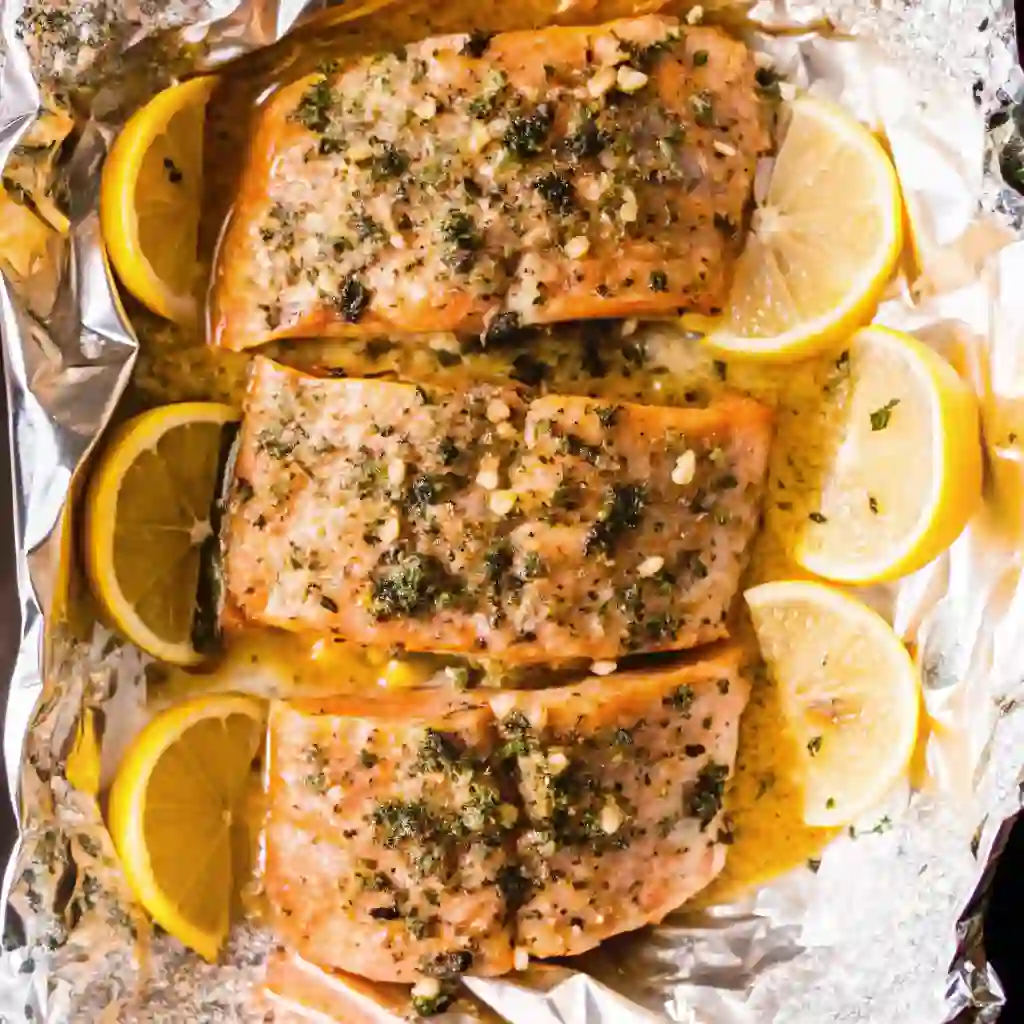
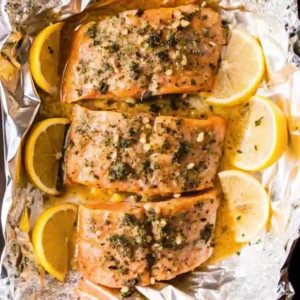
There’s something undeniably impressive about pulling a perfectly cooked salmon out of the oven tender, flaky, and glistening in a silky lemon butter sauce. This baked salmon with lemon butter cream sauce tastes like something you’d order at a cozy seafood restaurant, but it’s surprisingly simple to make right in your own kitchen. No complicated steps. No heavy cream. Just fresh ingredients working together beautifully.
What makes this recipe special is the foil packet method that gently steams the salmon, locking in moisture and creating that luscious, creamy texture naturally. If you’ve ever been nervous about overcooking salmon, don’t worry, I’ll walk you through every step so it turns out buttery, flavorful, and absolutely foolproof every single time.
The Secret Behind This Creamy Sauce (No Heavy Cream Needed)
When people hear “cream sauce,” they usually imagine heavy cream simmering on the stove. But this recipe creates that same rich mouthfeel using a smart technique instead of dairy. The magic happens inside the foil packet.
As the salmon bakes, the butter melts and blends with olive oil and fresh lemon juice. The steam trapped in the foil gently emulsifies everything together, creating a smooth, glossy sauce that coats the fish beautifully.
Here’s why it works so well:
- Butter provides richness and body.
- Olive oil stabilizes the emulsion so it doesn’t separate.
- Fresh lemon juice brightens the flavor and balances the richness.
- Steam circulation inside the foil creates a naturally silky texture.
The result? A light but luxurious butter cream sauce for salmon that tastes indulgent without actually containing cream.
This method also preserves moisture better than uncovered baking, which is why this easy baked salmon turns out tender instead of dry.
Simple Ingredients That Create Big Flavor
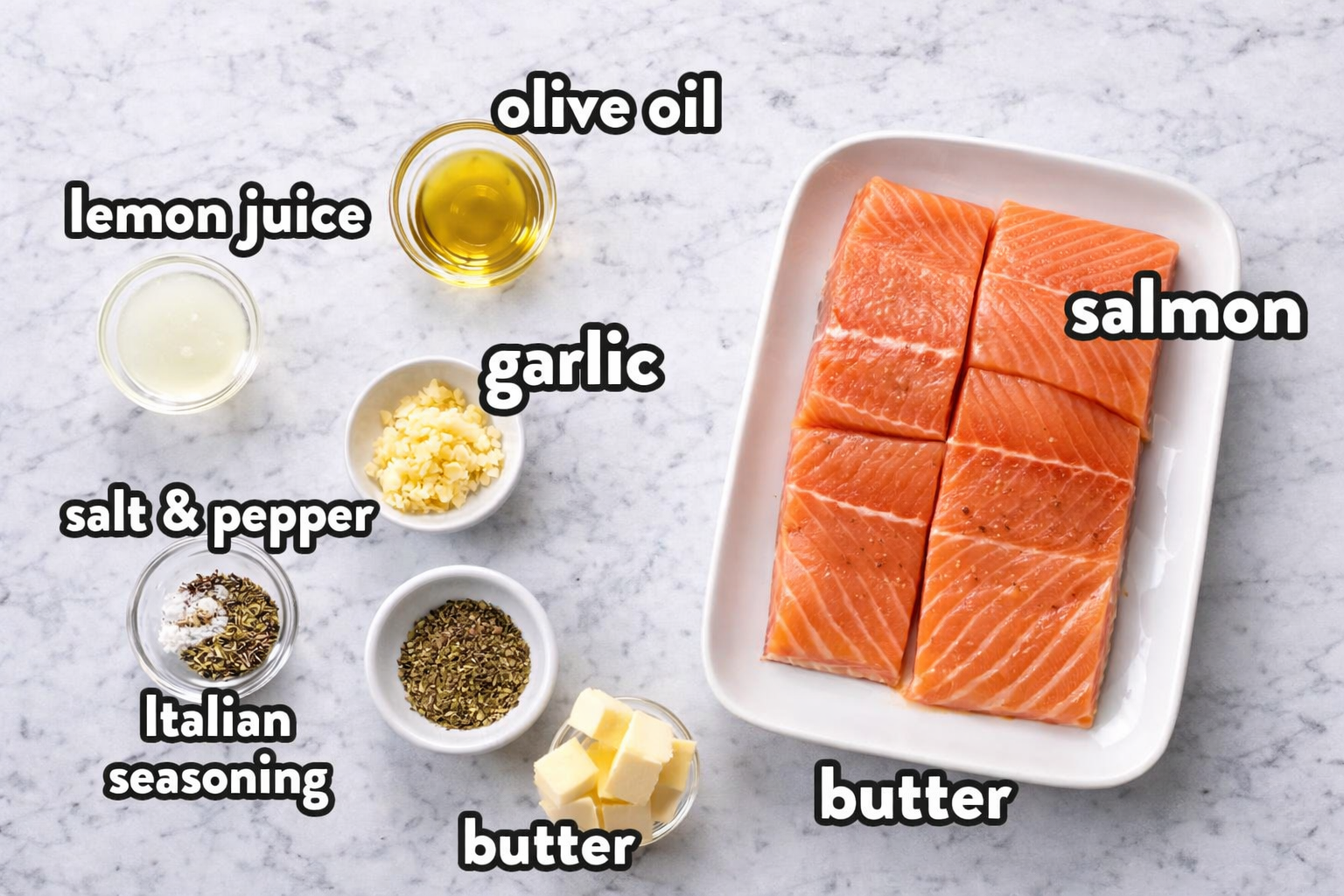
One of the best things about this recipe is how uncomplicated the ingredient list is. No heavy cream. No complicated sauce reductions. Just fresh, pantry-friendly staples that come together to create a silky, lemony finish.
Here’s exactly what you’ll need:
- 1.5 pounds salmon fillet
- 1 tablespoon olive oil
- 3 cloves garlic, finely minced (more or less to taste)
- ½ lemon, juice only
- 1 teaspoon Italian seasoning
- ¼ teaspoon salt
- Black pepper, to taste
- 2 tablespoons butter, diced
Why These Ingredients Work So Well Together
- Salmon fillet provides natural richness and healthy fats, making it ideal for creamy-style sauces without added cream.
- Olive oil + butter create the base of the sauce and help carry flavor evenly across the fish.
- Fresh garlic gives depth and savory warmth essential for a true garlic butter salmon flavor.
- Lemon juice cuts through the richness and enhances the natural taste of the salmon.
- Italian seasoning adds subtle herbal balance without overpowering the fish.
- Salt and pepper sharpen and round out the overall flavor profile.
Because this recipe relies on natural fat emulsification, quality matters. Fresh lemon juice (not bottled) and real butter will give you the smoothest texture and brightest finish.
This combination is what gives you that restaurant-style result while still keeping it simple enough for a weeknight dinner.
Essential Equipment for Perfect Foil-Baked Salmon
You don’t need any specialty cookware for this recipe. In fact, part of what makes it such an easy seafood dinner is how minimal the prep and cleanup are.
Here’s what you’ll need:
- Large rimmed baking sheet
- Aluminum foil (heavy-duty preferred)
- Pastry brush (optional)
Why Each Tool Matters
Large rimmed baking sheet
This catches any drippings that escape the foil packet. Even though the salmon is sealed, a rimmed pan protects your oven and makes cleanup effortless.
Aluminum foil (heavy-duty preferred)
The foil packet is the secret to creating that creamy baked salmon texture. It traps steam, which:
- Prevents drying out
- Encourages the emulsification of butter and lemon juice
- Gently cooks the fish evenly
If using regular foil, double-layer it to avoid tearing.
Pastry brush (optional)
This helps evenly spread olive oil across the foil before placing the salmon down. While optional, it ensures the fish won’t stick and promotes even cooking.
How to Make Baked Salmon with Lemon Butter Cream Sauce
This method keeps things simple, clean, and incredibly reliable. Whether you’re making this for a busy weeknight or browsing for salmon dinner ideas baked in the oven, these steps ensure perfectly tender results.
Step 1: Preheat your oven to 400°F. Place a large sheet of aluminum foil inside a large rimmed baking dish, making sure there’s enough overhang to fold and seal later. The baking dish will catch any drips and make cleanup much easier.
Step 2: Lightly grease the foil with olive oil. Place the salmon fillets on top, keeping them close together but not overlapping. Drizzle with 1 tablespoon olive oil, scatter the minced garlic evenly over the surface, then drizzle with fresh lemon juice. Sprinkle with Italian seasoning, salt, and black pepper. Dot the salmon evenly with diced butter. Fold and seal the foil securely, creating a tent over the fish.
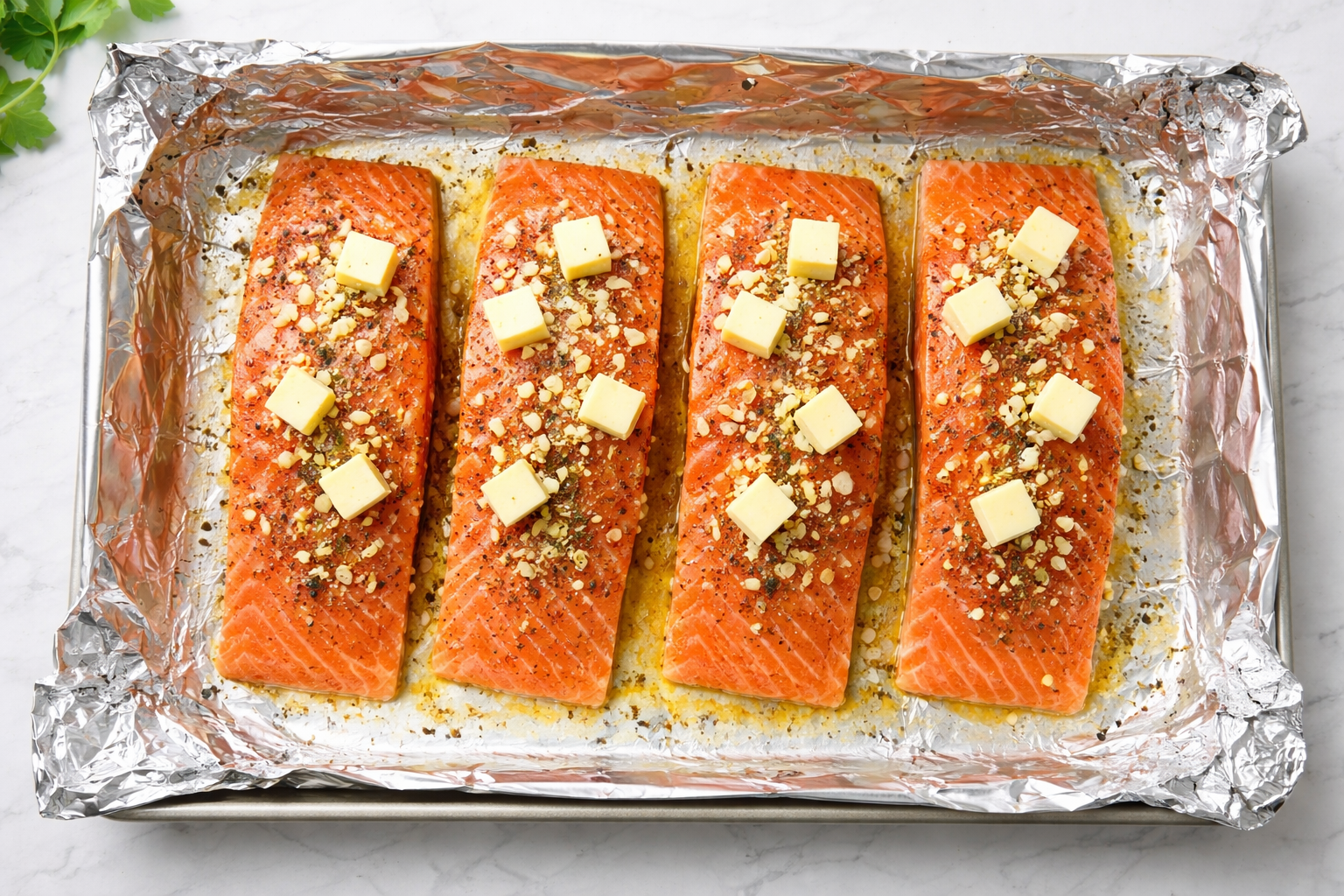
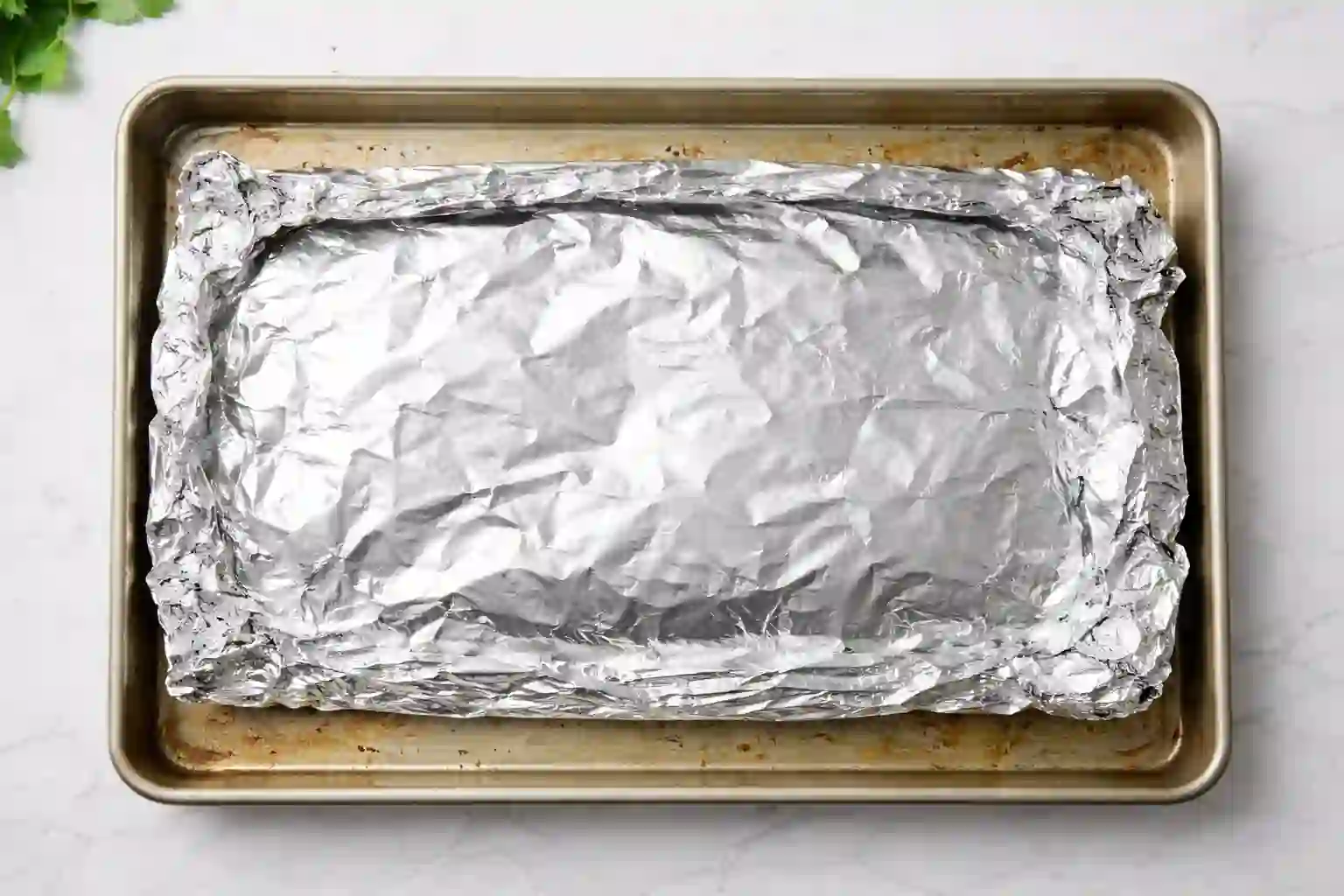
Step 3: Place the sealed foil packet onto the baking sheet and bake at 400°F for 10–15 minutes, depending on the thickness of your fillets. The salmon is done when it flakes easily with a fork and appears opaque throughout. Serve immediately while warm and glossy.
Pro Tips for Perfect Foil-Baked Salmon Every Time
The foil packet method may be simple, but a few small details make a big difference in texture and flavor. These tips will help you get that silky, buttery finish every single time.
The Air Pocket: Steam Is Your Secret Weapon
When sealing the foil, don’t press it tightly against the salmon. Instead, create a loose tent with a little space above the fish.
Why this matters:
- Trapped steam cooks the salmon gently.
- The butter and lemon juice emulsify more evenly.
- The surface won’t scorch or dry out.
Think of it as creating a mini steam oven right inside your baking sheet.
Garlic Distribution: Why Finely Minced Matters
Finely mincing the garlic ensures it melts into the sauce rather than sitting in large chunks on top.
If the pieces are too big:
- They won’t soften completely in 10–15 minutes.
- The flavor won’t distribute evenly.
- You may get harsh bites instead of balanced flavor.
Even seasoning is key to achieving that smooth lemon cream sauce for salmon texture.
Butter Placement: Dot, Don’t Melt
It might be tempting to melt the butter first, but don’t.
Dotting small cubes of butter across the salmon allows:
- Even melting across the surface
- Gradual blending with lemon juice
- A more balanced butter cream sauce for salmon
When butter melts slowly in place, it creates a more uniform glaze instead of pooling in one area.
These small adjustments elevate this dish from good to restaurant-level creamy baked salmon.
How to Know When Your Salmon Is Perfectly Cooked
Salmon cooks quickly, and just a few extra minutes can take it from buttery to dry. The good news? It’s very easy to check when you know what to look for.
The Flake Test
Insert a fork gently into the thickest part of the fillet and twist slightly.
If the salmon:
- Separates easily into flakes
- Looks opaque (not translucent)
- Feels tender but still moist
…it’s ready.
If it resists flaking or looks glossy and raw inside, give it another minute or two.
Temperature Guide
For the most tender texture, aim for an internal temperature of:
125°F–130°F for medium
At this range, the salmon stays juicy and buttery instead of dry. According to the USDA, fish is considered safe at 145°F, but many chefs prefer pulling salmon earlier and allowing carryover heat to finish the cooking gently.
Using an instant-read thermometer removes the guesswork completely.
Resting Time Matters
After removing the baking sheet from the oven, keep the foil sealed for about 2 minutes.
Why?
- Residual steam finishes cooking the fish
- Juices redistribute throughout the fillet
- The lemon butter sauce thickens slightly
This short rest helps preserve the texture that makes this recipe such a standout among salmon dinner ideas baked in the oven.
What to Serve with Lemon Butter Salmon
This baked salmon with lemon butter cream sauce is incredibly versatile. The bright citrus and buttery richness pair well with both lighter sides and classic comfort foods.
Whether you’re planning a weeknight meal or browsing easy family dinners, these pairings make it feel complete without extra stress.
Low-Carb Pairings
If you’re keeping things lighter, these options complement the richness of the salmon beautifully:
- Roasted asparagus – The slight crispness balances the buttery sauce.
- Cauliflower rice – Soaks up the lemon butter beautifully without feeling heavy.
- Simple green salad – Tossed with olive oil and lemon for freshness.
These sides let the salmon shine while keeping the meal clean and balanced.
Classic Comfort Sides
If you want something heartier, these traditional options work wonderfully:
- Mashed potatoes – Perfect for soaking up every drop of the lemon butter sauce.
- Angel hair pasta – Light enough not to overpower the fish, but satisfying.
- Steamed green beans – Add color and gentle crunch.
Because the sauce forms right in the foil, there’s plenty to drizzle over your sides. That’s what makes this feel like a special dinner without requiring complicated sauce recipes or extra pans.
How to Store and Reheat Salmon Without Drying It Out
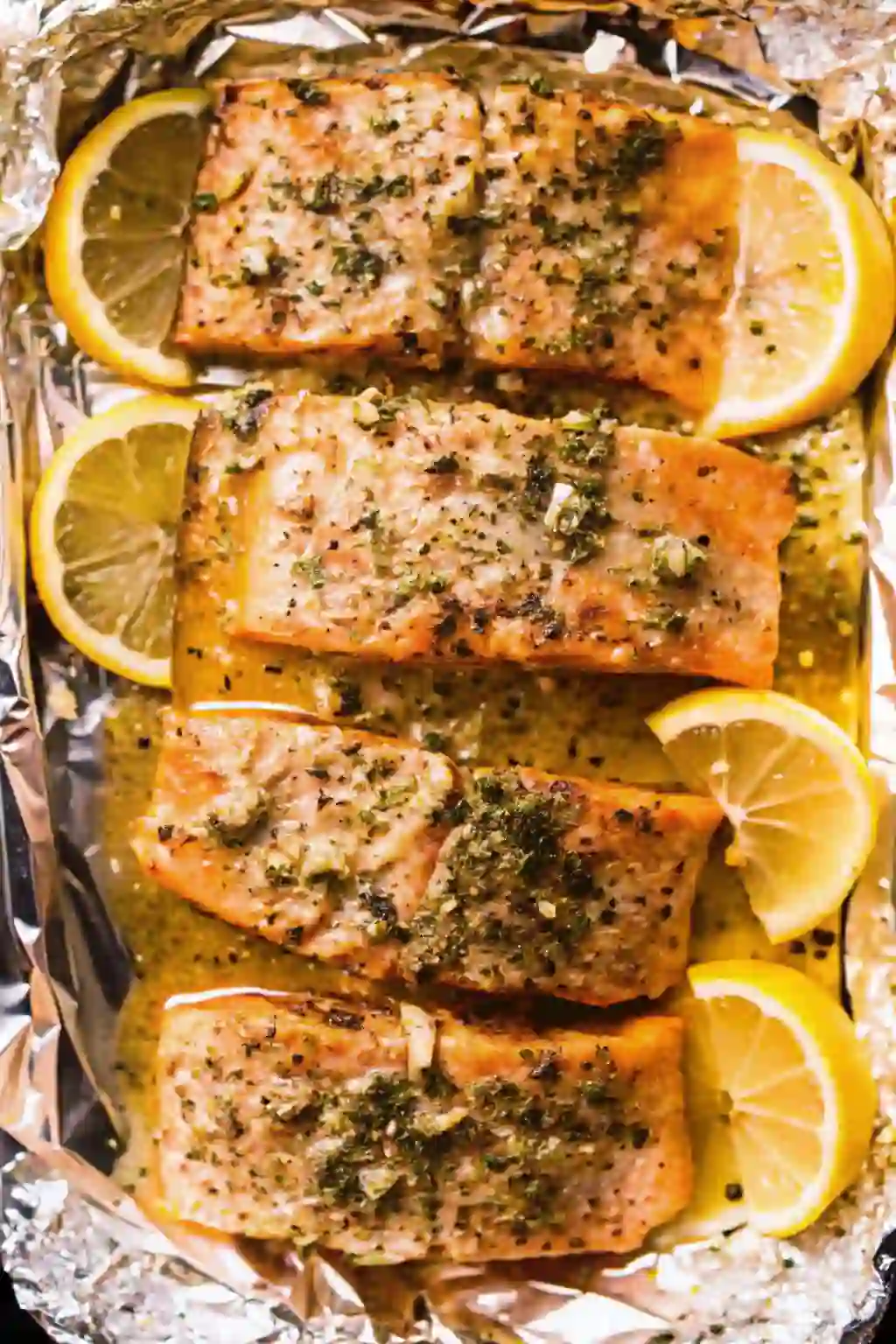
One of the best things about this easy-baked salmon is that it reheats surprisingly well if you do it gently.
Because the fish is cooked in a foil packet, it retains more moisture than many other oven methods. That means leftovers can still taste tender the next day.
Fridge Life
- Store in an airtight container.
- Refrigerate for 2–3 days.
- Keep any leftover lemon butter sauce with the salmon to help maintain moisture.
For food safety, always refrigerate within two hours of cooking. According to the USDA’s food storage guidelines, cooked fish should be consumed within 3–4 days when properly stored.
Reheating Without Drying It Out
The key to reheating salmon is low, gentle heat.
Oven Method (Best Option):
- Preheat oven to 275°F.
- Place salmon in a small baking dish.
- Add a splash of water or broth to rehydrate the sauce.
- Cover loosely with foil.
- Heat for about 10–15 minutes, until warmed through.
Microwave (Quick Option):
- Use 50% power.
- Heat in 30-second intervals.
- Cover loosely to prevent splatter.
High heat causes proteins to tighten and squeeze out moisture, which is what leads to dry fish. Gentle reheating helps preserve that creamy baked salmon texture you worked so hard to achieve.
Conclusion
If you’ve ever wanted a restaurant-style salmon dinner without complicated steps or heavy sauces, this recipe delivers. The foil packet method keeps the fish tender, the lemon brightens every bite, and the butter creates that silky finish that feels indulgent without being overwhelming.
Give this baked salmon with lemon butter cream sauce a try tonight and don’t forget to leave a comment letting me know how it turned out! If you loved it, save it for later or share it with someone who needs an easy, impressive dinner idea.
Recipe FAQs
Baked Salmon with Lemon Butter Cream Sauce (Easy!)
Equipment
- large rimmed baking dish To catch drippings
- aluminum foil For sealing salmon
- oven
- measuring spoons
- knife and cutting board For garlic and lemon
Ingredients
- 1.5 pounds salmon fillet
- 1 tablespoon olive oil
- 3 cloves garlic finely minced
- ½ lemon, juiced
- 1 teaspoon Italian seasoning
- ¼ teaspoon salt
- black pepper to taste
- 2 tablespoons butter, diced
Instructions
- Preheat oven to 400°F. Place a large piece of aluminum foil in a large rimmed baking dish that will comfortably hold all of your salmon.
- Lightly grease the foil with olive oil. Place the salmon fillets on top. Drizzle with olive oil and evenly scatter garlic over the salmon. Drizzle with lemon juice and sprinkle with Italian seasoning, salt, and black pepper. Dot with butter and seal the foil over the salmon.
- Bake for 10–15 minutes, depending on thickness, or until salmon flakes easily with a fork. Serve immediately.