
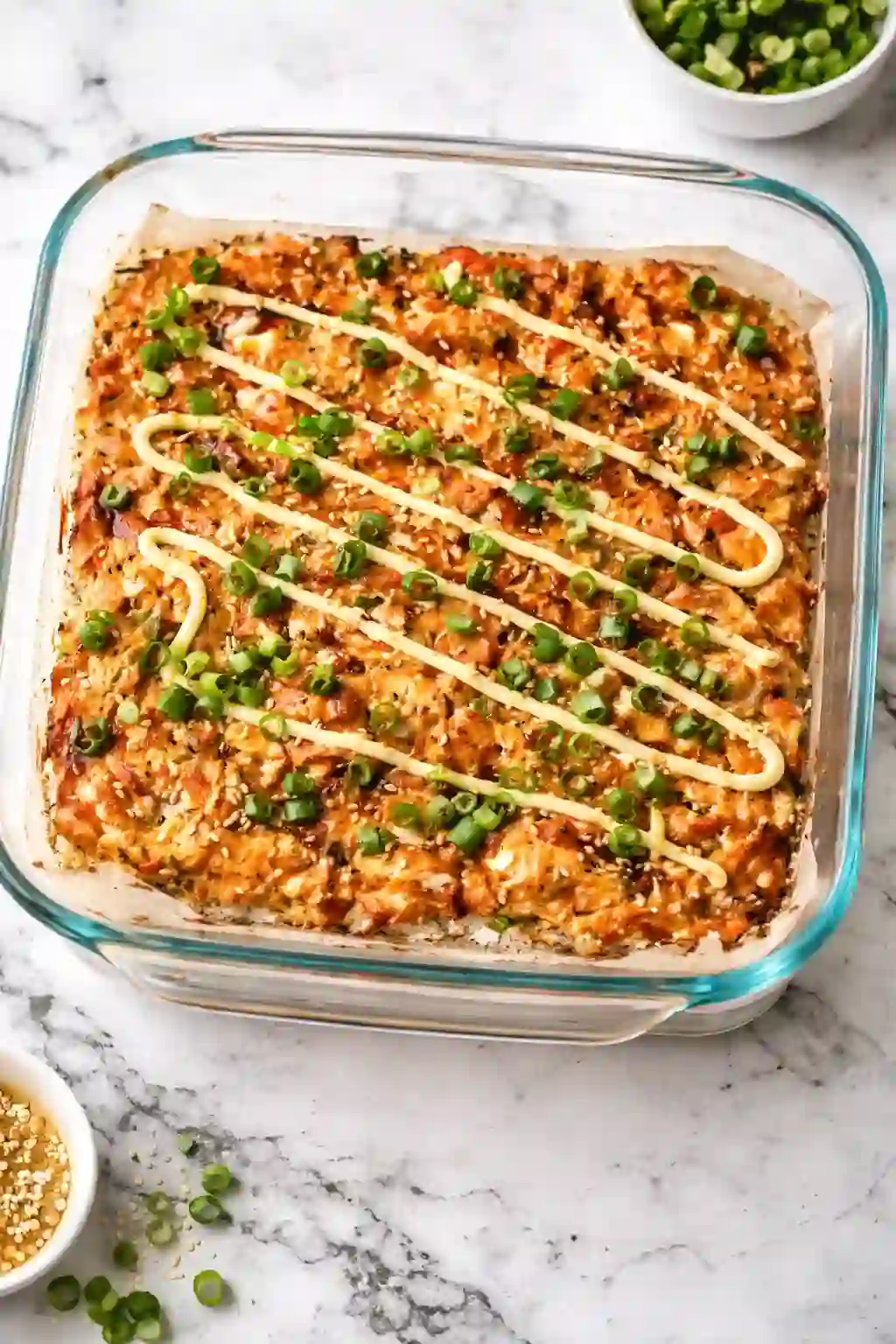
Do you love the bold, umami-packed flavors of a spicy salmon roll but hate paying restaurant prices or wrestling with a bamboo mat at home? You’re definitely not alone. This recipe takes everything you crave about sushi night and turns it into something warm, cozy, and refreshingly simple.
Think of this Spicy Salmon Sushi Bake as a deconstructed sushi roll baked into a creamy, comforting casserole. Instead of cold rice and careful rolling, you’ll layer perfectly seasoned sushi rice, tender flaky salmon, and a rich sriracha-mayo topping, then bake it until bubbly and irresistible. It’s a viral favorite for a reason: it’s fun to eat, easy to make, and comes together in under 40 minutes, making it perfect for potlucks, family dinners, or anytime you want sushi vibes without the stress.
What Is a Sushi Bake (And Why Everyone Loves It)
At its core, a sushi bake is a deconstructed sushi roll turned into a warm, scoopable casserole. Instead of carefully rolling rice and fillings into tight cylinders, everything is layered into a baking dish: seasoned sushi rice on the bottom, a creamy seafood topping on top, then baked until warm, melty, and lightly bubbling.
This style of sushi became popular as a potluck-friendly dish, especially in Hawaii and the Philippines, where it evolved as a way to serve sushi flavors to a crowd without the need for rolling skills or specialty tools. Over time, it exploded on social media thanks to its approachable method, customizable toppings, and seriously crave-worthy texture.
So why does it work so well? It’s all about contrast:
- Warm, creamy salmon topping
- Slightly sticky, seasoned rice underneath
- Cool, crisp nori sheets served on the side
Each bite gives you the same flavor balance as a traditional roll, but in a more relaxed, comfort-food format. That’s exactly why this spicy salmon sushi bake has become a viral favorite it delivers big sushi flavor with minimal effort and maximum payoff.
Essential Kitchen Equipment for Sushi Bake Success
One of the best things about this recipe is that it doesn’t require any fancy sushi tools. That said, using the right basic equipment makes a noticeable difference in texture, timing, and overall results.
Here’s what you’ll want on hand:
- 9×9-Inch Baking Dish
This size gives you the ideal rice-to-salmon ratio. A larger dish spreads everything too thin, while a smaller one can make the layers overly thick and dense. A square pan also makes it easier to scoop clean portions for serving with nori. - Fine Mesh Sieve
This is non-negotiable for rinsing sushi rice properly. A fine mesh sieve allows you to wash away excess surface starch without losing grains down the drain, which is crucial for achieving sticky but distinct rice instead of a gummy mass. - Air Fryer or Oven
What makes this recipe stand out is the flexibility. The air fryer cooks salmon quickly and gives it a lightly crisp exterior in just 10 minutes, while the oven option works better if you’re cooking larger portions or doubling the recipe. - Rice Paddle (or Wide Spatula)
When seasoning the rice, a rice paddle helps you gently fold and “cut” through the grains instead of crushing them. This small detail keeps the texture light and fluffy rather than mashed.
With these simple tools, you’ll be set up for an easy, stress-free cooking process and consistently great results.
Ingredients You’ll Need for Spicy Salmon Sushi Bake
This recipe keeps things approachable while still delivering bold, sushi-restaurant flavor. Every ingredient plays a role in balancing heat, creaminess, and texture, so it’s best to stick closely to the list below for the intended result.
Sushi Rice
- 1 cup sushi rice
- ¼ cup rice wine vinegar
- 2 teaspoons sugar
- 1 teaspoon salt
Sushi rice is the foundation of the entire dish. The vinegar, sugar, and salt seasoning gives the rice that signature tangy-slightly-sweet flavor that makes sushi taste like sushi, not just plain rice.
Salmon Mixture
- ½ cup furikake seasoning
- 8 oz salmon fillets (2 portions)
- 1 tablespoon soy sauce (gluten-free if needed or use tamari)
- ¼ cup cream cheese, softened
- ¼ cup mayonnaise (Kewpie or regular mayonnaise)
- 2 tablespoons sriracha sauce or sambal oelek
This is where the magic happens. The salmon provides richness and protein, while the creamy base and chili sauce create that signature spicy, savory topping that melts beautifully when baked.
Toppings
- 1 avocado, sliced or cubed
- ½ cucumber, sliced or cubed
- 2 green onions, sliced
- Nori seaweed sheets
- More Kewpie mayo
- Unagi sauce
Fresh toppings add contrast and brightness, while the nori sheets are essential for serving. Think of them as edible scoops that keep every bite balanced and crisp.
Ingredient Spotlights and Smart Substitutions
While this recipe is simple, a few key ingredients do a lot of heavy lifting. Understanding why they work makes it easier to get great results every time, even if you need to make small swaps.
- Kewpie Mayo vs. Regular Mayo
Kewpie mayonnaise is made with egg yolks and rice vinegar, giving it a richer, slightly tangier flavor than standard American mayo. That extra umami makes the topping taste more “restaurant quality.” Regular mayo absolutely works, but if you can find Kewpie, it’s a noticeable upgrade. - Furikake Seasoning
Furikake is a Japanese rice seasoning typically made with sesame seeds, dried seaweed, salt, and a touch of sugar. It adds instant flavor and texture with zero effort. If you can’t find it, a quick substitute is crushed roasted seaweed mixed with sesame seeds, though the flavor won’t be quite as complex. - Fresh Salmon vs. Canned Salmon
Fresh salmon fillets give you the best texture: tender, flaky, and rich without being mushy. Canned salmon can work in a pinch and is more budget-friendly, but the finished topping will be softer and less luxurious. If using canned, drain it very well to avoid excess moisture.
These ingredients come together to create that signature creamy, savory topping that makes a creamy sushi bake so addictive, while still leaving room for flexibility based on what you have available.
Step-by-Step Instructions for Spicy Salmon Sushi Bake
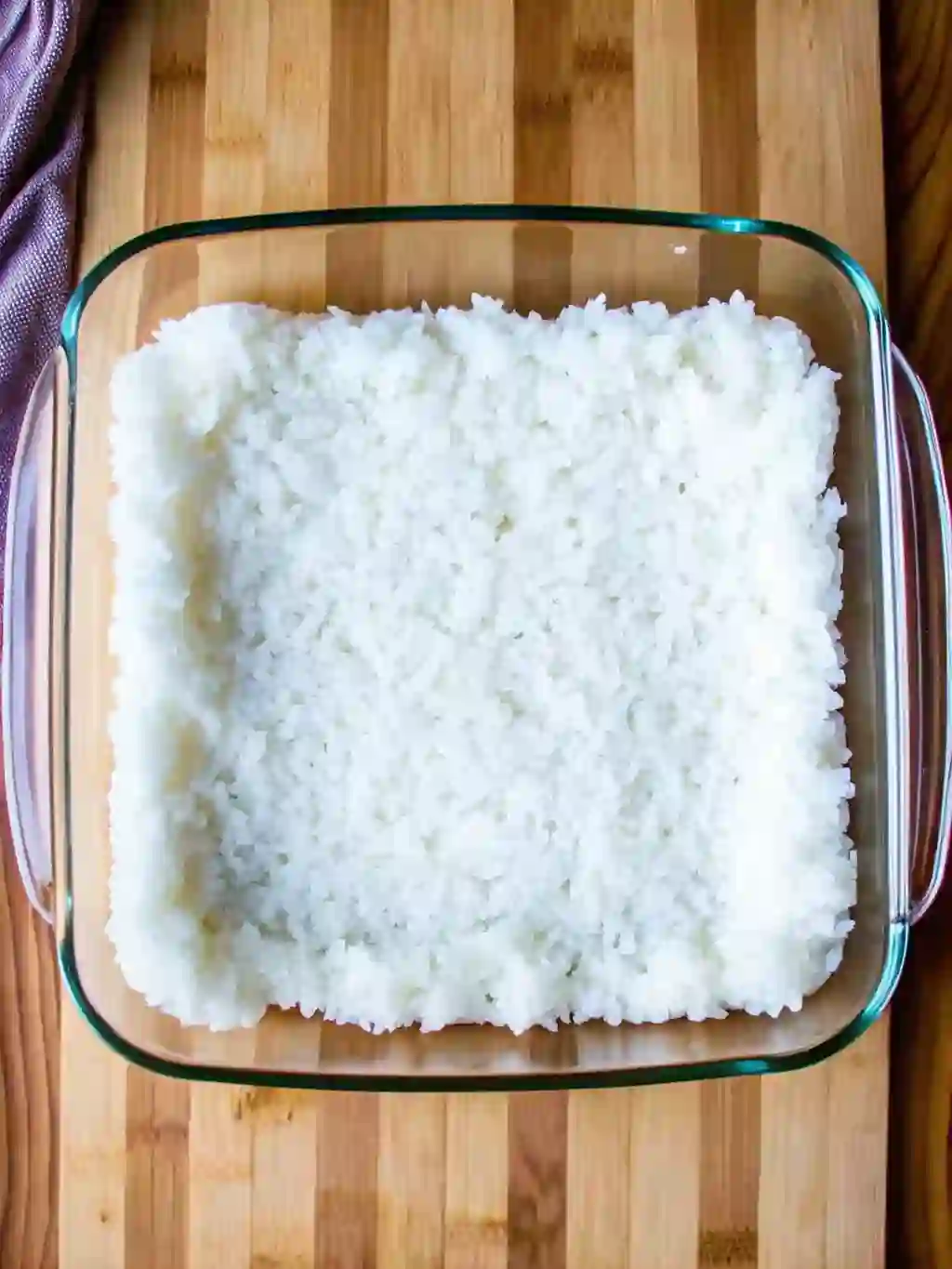
Step 1: Rinse the sushi rice thoroughly under cold water using a fine mesh sieve until the water runs clear. Once rinsed, cook the rice according to the package instructions, usually about 20 minutes, until fully cooked and tender.
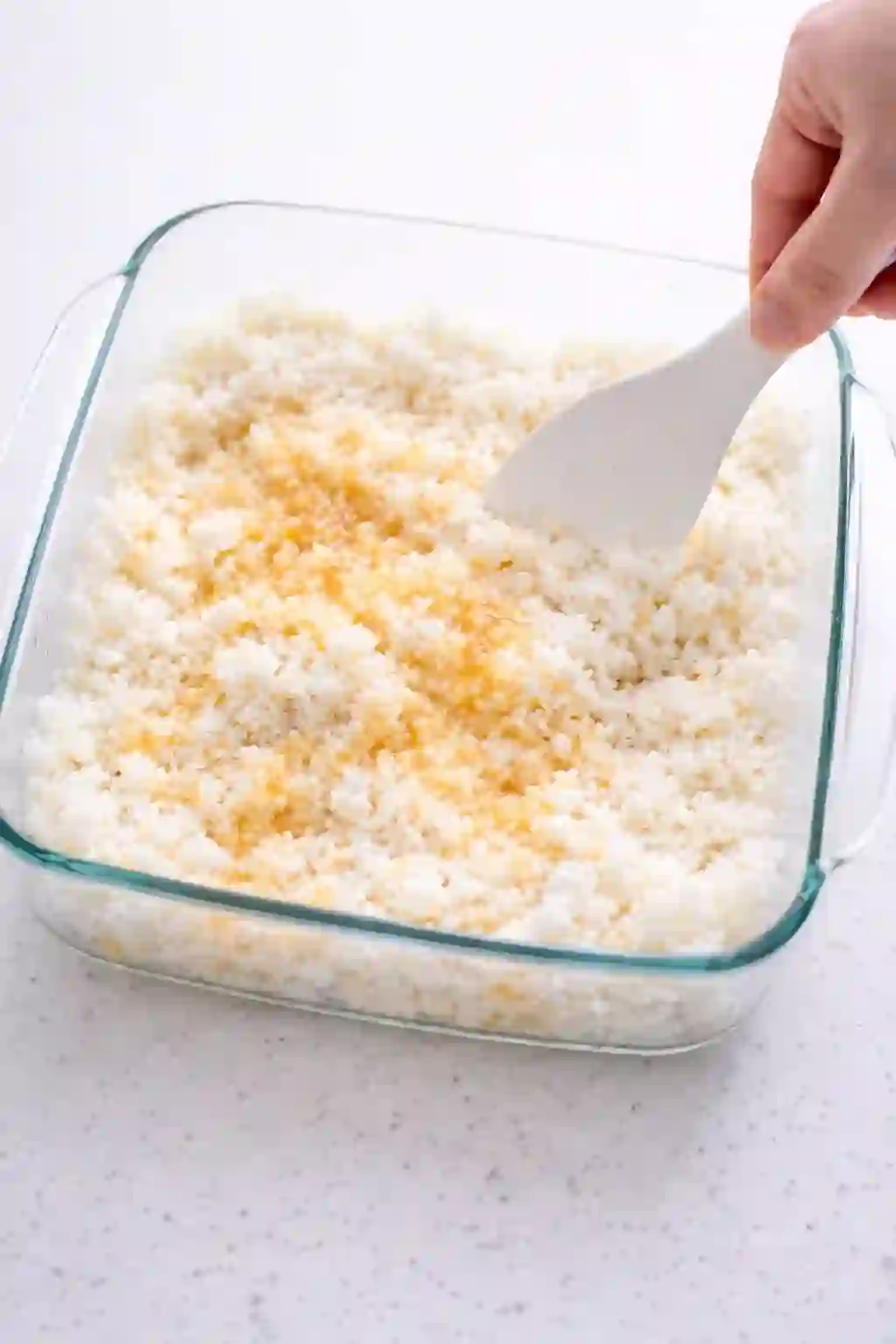
Step 2: Once the rice is fully cooked, sprinkle the rice wine vinegar, sugar, and salt evenly over the hot rice. Use a rice paddle or spatula to gently cut and fold the seasoning into the rice until evenly combined.
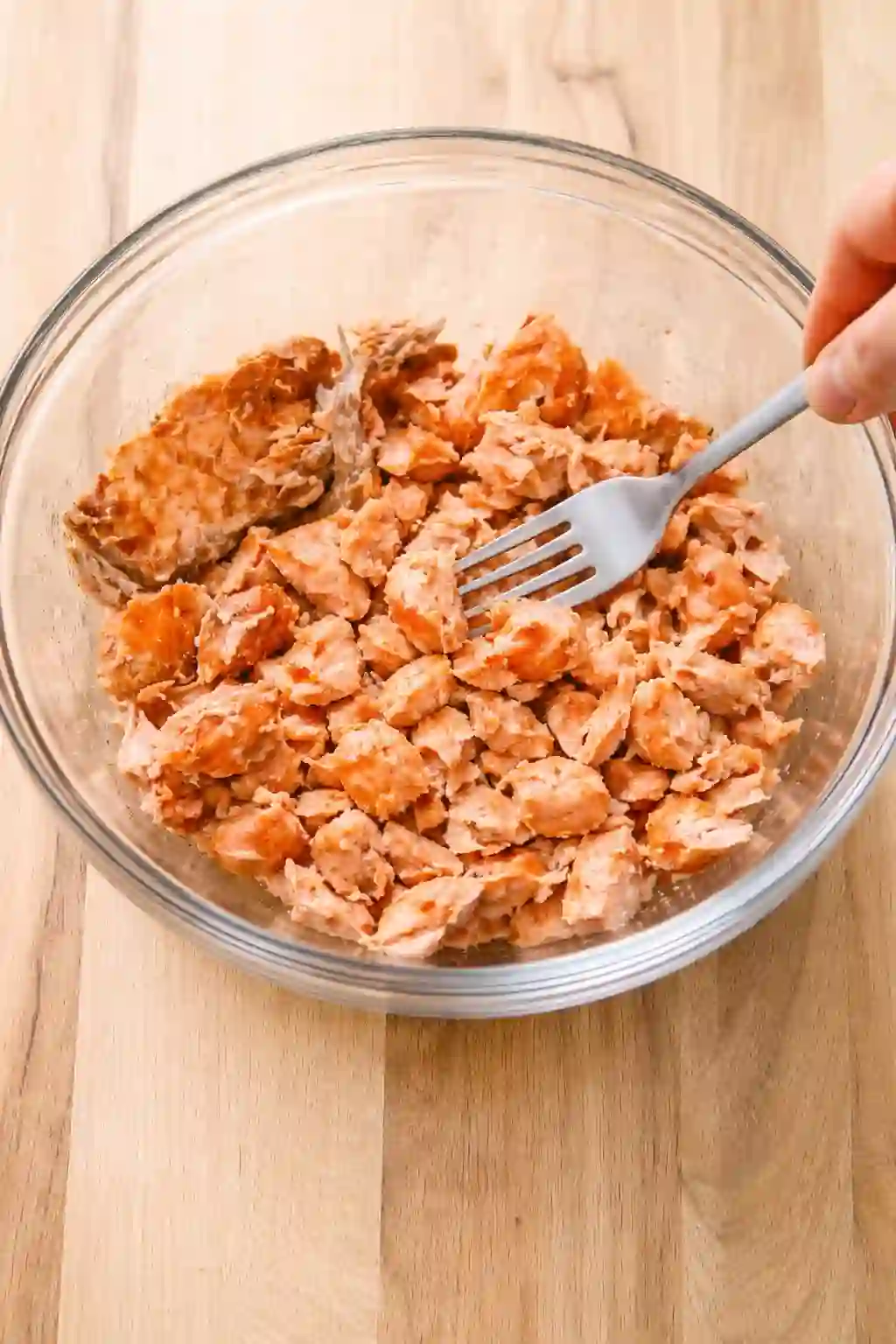
Step 3: Rub the salmon fillets evenly with soy sauce, coating all sides. Cook the seasoned salmon in an air fryer at 400°F for 10 minutes, or bake in the oven at 400°F for 15–20 minutes, depending on thickness. Once fully cooked, use a fork to gently break the salmon into small, flaky pieces. This can be done while the rice is cooking.

Step 4: In a large bowl, combine the flaked salmon with the cream cheese, mayonnaise, and sriracha sauce. Mix until everything is evenly combined and creamy.
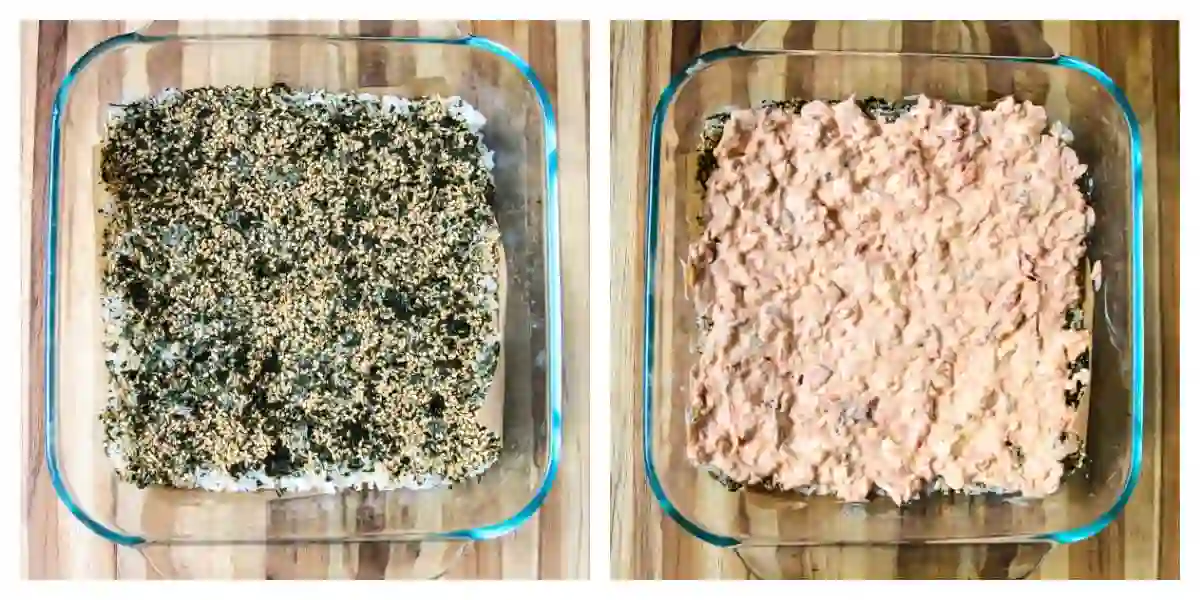
Step 5: Preheat the oven and line a 9×9-inch baking dish with parchment paper or lightly grease it. Press the seasoned sushi rice evenly into the dish and sprinkle with furikake. Spread the creamy salmon mixture evenly over the top, making sure it reaches all the corners for an even bake.Then Bake the sushi bake in the preheated oven at 425°F for 15 minutes, until heated through and lightly bubbling on top.
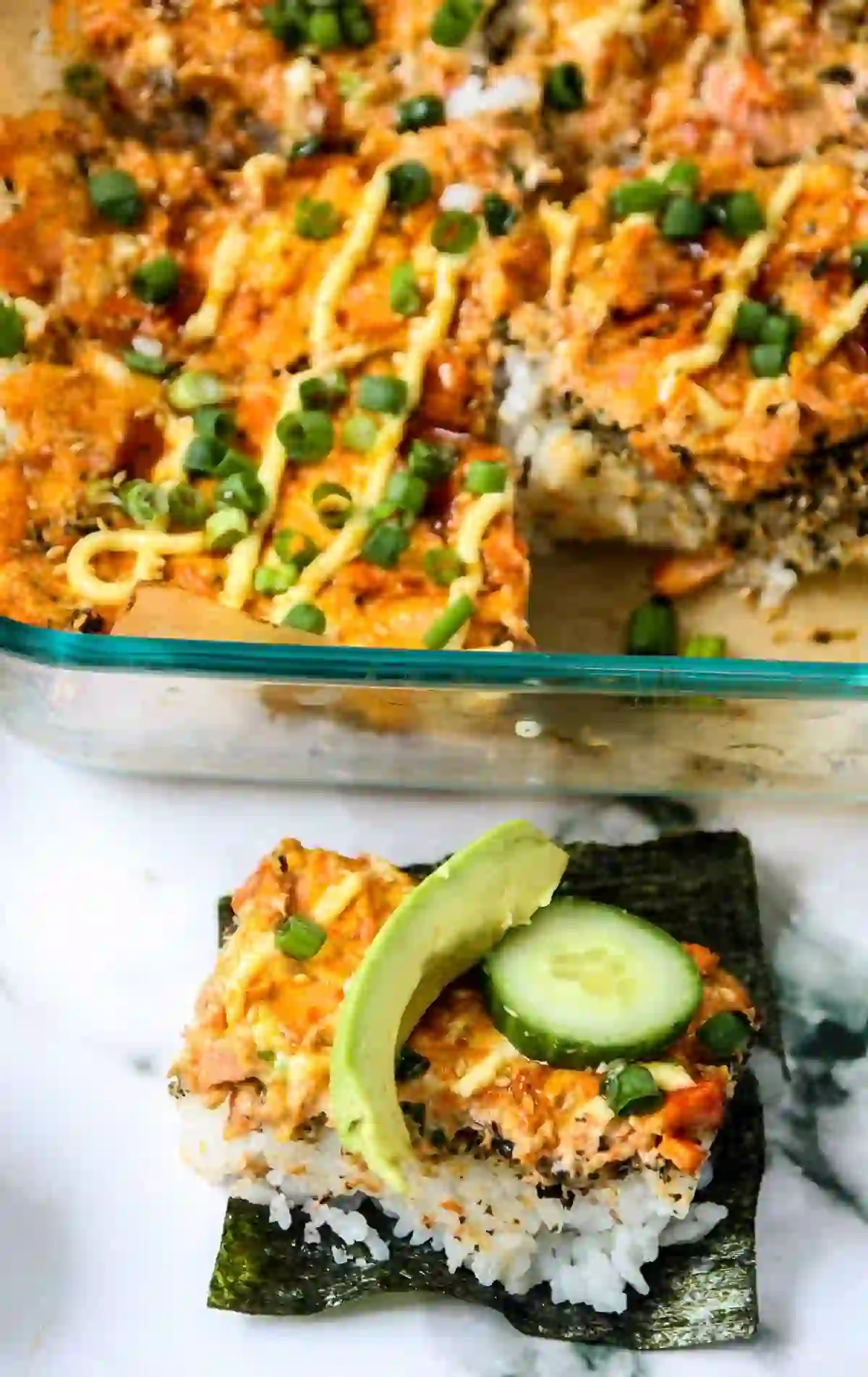
Step 6: Remove the sushi bake from the oven. Drizzle with additional mayo, then top with sliced green onions, avocado, and cucumber. Serve warm with nori sheets on the side.
Air Fryer vs. Oven: Which Cooking Method Is Better?
Most sushi bake recipes only offer oven instructions, but this one gives you options—because real kitchens (and schedules) aren’t one-size-fits-all. Both methods work beautifully; the best choice depends on your timing and batch size.
- The Air Fryer Advantage
Cooking the salmon in the air fryer is the fastest route. In just 10 minutes, the fillets cook through and develop a lightly crisp exterior that adds extra texture once mixed into the creamy topping. It’s ideal for weeknights, smaller portions, or when you want to shave time off the prep without sacrificing flavor. - The Oven Method
The oven is the better choice if you’re doubling the recipe or working with larger salmon fillets that won’t fit comfortably in an air fryer basket. While it takes a bit longer, the results are still tender and flaky, and it’s more hands-off if your air fryer space is limited.
No matter which method you choose, the salmon ends up folded into a rich mixture that anchors the salmon and rice bake, so you’re free to pick what works best for your kitchen setup.
The Secret to Perfect Sushi Rice Every Time
Sushi rice might seem simple, but it’s the foundation of the entire dish, and small mistakes can dramatically affect the final texture. The goal is rice that’s sticky but not mushy, with distinct grains that hold together without turning into a dense block.
- Why We Rinse the Rice
Rinsing sushi rice under cold water until it runs clear removes excess surface starch. If this step is skipped, the leftover starch gelatinizes during cooking, causing the rice to clump into a gummy, glue-like mass instead of light, cohesive grains. - The “Cut and Fold” Technique
When seasoning the hot rice with vinegar, sugar, and salt, avoid stirring or mashing. Instead, use a rice paddle to gently slice through the rice and fold it over itself. This motion evenly distributes seasoning while preserving the structure of each grain.
Mastering these two techniques transforms ordinary rice into the kind that makes a creamy sushi bake feel balanced and professional, even though it’s baked and served casually.
Easy Customizations and Flavor Variations
One of the reasons this dish is so popular is how easy it is to customize. Once you understand the base layers, you can tweak the flavors to suit your spice tolerance, preferences, or what you already have in the fridge.
- Adjusting the Heat
If you prefer a milder bake, reduce the sriracha to 1 tablespoon for a gentler warmth. Love extra spice? Add more sriracha or finish the dish with thinly sliced jalapeños on top for a fresh, sharp kick. - The “California Roll” Twist
For a classic sushi shop vibe, mix in imitation crab (surimi) with the salmon mixture. It adds subtle sweetness and pairs beautifully with the creamy sauce, mimicking the flavor profile of a traditional California roll. - Protein Swaps
No fresh salmon on hand? Shrimp works well when cooked and chopped, and canned tuna can be used as a pantry-friendly option. Just be sure any alternative protein is well-drained so the topping doesn’t become watery.
These variations let you keep the comforting structure of a sushi bake with salmon while adapting it to different tastes, occasions, or ingredient availability.
How to Serve and Eat Sushi Bake the Right Way
Sushi bake is meant to be interactive and fun, not eaten like a traditional casserole. The serving method is what brings everything together and keeps the textures balanced.
- The “Taco” Method
Place a square of nori in the palm of your hand, scoop a spoonful of the warm bake onto it, and eat it like a taco. This gives you the perfect bite every time—warm, creamy filling wrapped in crisp seaweed with no rolling required. - Keep the Nori Crisp (Crucial Tip)
Never crumble or layer nori on top of the casserole before baking. The steam will make it soggy and chewy. Always serve nori sheets on the side so they stay dry and crisp until the moment you eat. - What to Serve With It
To turn this into a complete meal, pair it with:- Edamame sprinkled with sea salt
- A simple bowl of miso soup
- Japanese cucumber salad (sunomono) for a refreshing contrast
Serving it this way keeps the flavors bright and the textures intentional, which is exactly what makes a spicy mayo sushi–style dish so satisfying.
How to Store and Reheat Sushi Bake Without Drying It Out
Leftover sushi bake can be just as enjoyable the next day if it’s handled properly. The biggest challenge is the rice, which naturally changes texture once refrigerated.
- Why Rice Gets Hard in the Fridge
Sushi rice firms up due to a process called starch retrogradation, where starch molecules tighten as they cool. This can make leftovers feel dry or grainy if reheated incorrectly. - Proper Storage
Transfer leftovers to an airtight container and refrigerate for up to 3 days. Keeping air out helps prevent the rice from drying prematurely. - The Reheating Trick That Works
Always reheat—never eat this dish cold. Place a portion in the microwave and drape a damp paper towel over the top before heating. The added moisture creates steam, which softens the rice and restores its original creamy texture in this salmon and rice bake. - Add Fresh Toppings After Reheating
Avocado and cucumber should always be added fresh. Reheating them causes discoloration and mushy texture, which takes away from the contrast that makes this dish shine.
Handled this way, leftovers stay comforting, flavorful, and surprisingly close to freshly baked.
Conclusion
There’s a reason this Spicy Salmon Sushi Bake has gone from a viral trend to a repeat favorite in home kitchens. It delivers everything we love about sushi seasoned rice, savory salmon, and creamy heat in a warm, scoopable format that’s easy, comforting, and perfect for sharing. Whether it’s for a potluck or a fun family dinner, that contrast of bubbly filling with crisp nori makes every bite feel special.
If you enjoyed this recipe, you might also love my Korean Gochujang Beef Bowls (Sweet, Spicy & Ready in 20 Minutes) for another bold, weeknight-friendly meal. I’d love to hear how your sushi bake turned out, so leave a comment or rating if you try it. And don’t forget to save this recipe for the next time a sushi craving hits.
Recipe FAQs
Can I use brown rice or jasmine rice instead of sushi rice?
It’s not recommended. Sushi rice has a specific starch content that allows it to stick together while staying tender. Brown rice and jasmine rice don’t bind the same way, which can cause the base to fall apart and lose that classic sushi texture.
Is this recipe gluten-free?
It can be. Use tamari instead of regular soy sauce and double-check the label on your furikake seasoning, as some blends contain wheat-based ingredients.
Do I need to eat sushi bake hot?
Yes, this dish is best served warm. Heating keeps the rice soft and the topping creamy, which is essential for the intended texture and flavor.
What’s the best way to serve it for guests?
Set the warm bake in the center of the table with nori sheets, toppings, and a serving spoon. This self-serve setup keeps things casual and makes it easy for everyone to build their own perfect bite.

This Spicy Salmon Sushi Bake Is the Easiest Way to Make Sushi at Home

Equipment
- fine mesh sieve
- rice cooker or pot
- rice paddle or spatula
- air fryer or oven
- mixing bowl
- 9×9 inch baking dish
- parchment paper or cooking spray
Ingredients
- 1 cup sushi rice
- ¼ cup rice wine vinegar
- 2 teaspoon sugar
- 1 teaspoon salt
- ½ cup furikake seasoning
- 8 oz salmon fillets (2 portions)
- 1 tablespoon soy sauce (or tamari)
- ¼ cup cream cheese, softened
- ¼ cup mayonnaise (Kewpie or regular)
- 2 tablespoon sriracha sauce (or sambal oelek)
- 1 avocado, sliced or cubed
- ½ cucumber, sliced or cubed
- 2 green onions, sliced
- nori seaweed sheets
- extra Kewpie mayo (for drizzling)
- unagi sauce (for drizzling)
Instructions
- Rinse the sushi rice thoroughly under cold water using a fine mesh sieve until the water runs clear. Once rinsed, cook the rice according to the package instructions, usually about 20 minutes, until fully cooked and tender.
- When the rice is cooked, sprinkle the rice wine vinegar, sugar and salt over it and use a rice paddle or spatula to gently combine.
- Rub the salmon fillets evenly with soy sauce, coating all sides. Cook the seasoned salmon in an air fryer at 400°F for 10 minutes, or bake in the oven at 400°F for 15–20 minutes, depending on thickness. Once fully cooked, use a fork to gently break the salmon into small, flaky pieces. (Do this while the rice is cooking).
- In a large bowl, combine the salmon, cream cheese, mayonnaise, and sriracha sauce.
- Preheat oven to 425°F. Line a 9×9″ baking dish with parchment paper, or use cooking spray.
- Press the sushi rice evenly into the prepared baking pan. Sprinkle with furikake.
- Spread the salmon mixture evenly over top of the rice.
- Bake for 15 minutes, until heated through and bubbling slightly.
- Top with a drizzle of mayo, green onion slices, avocado and cucumber. Serve with squares of nori sheets.